Written by Boyadzhyan Legal Shield editorial team
Reviewed for legal accuracy by Knarik Boyadzhyan
Last substantively reviewed
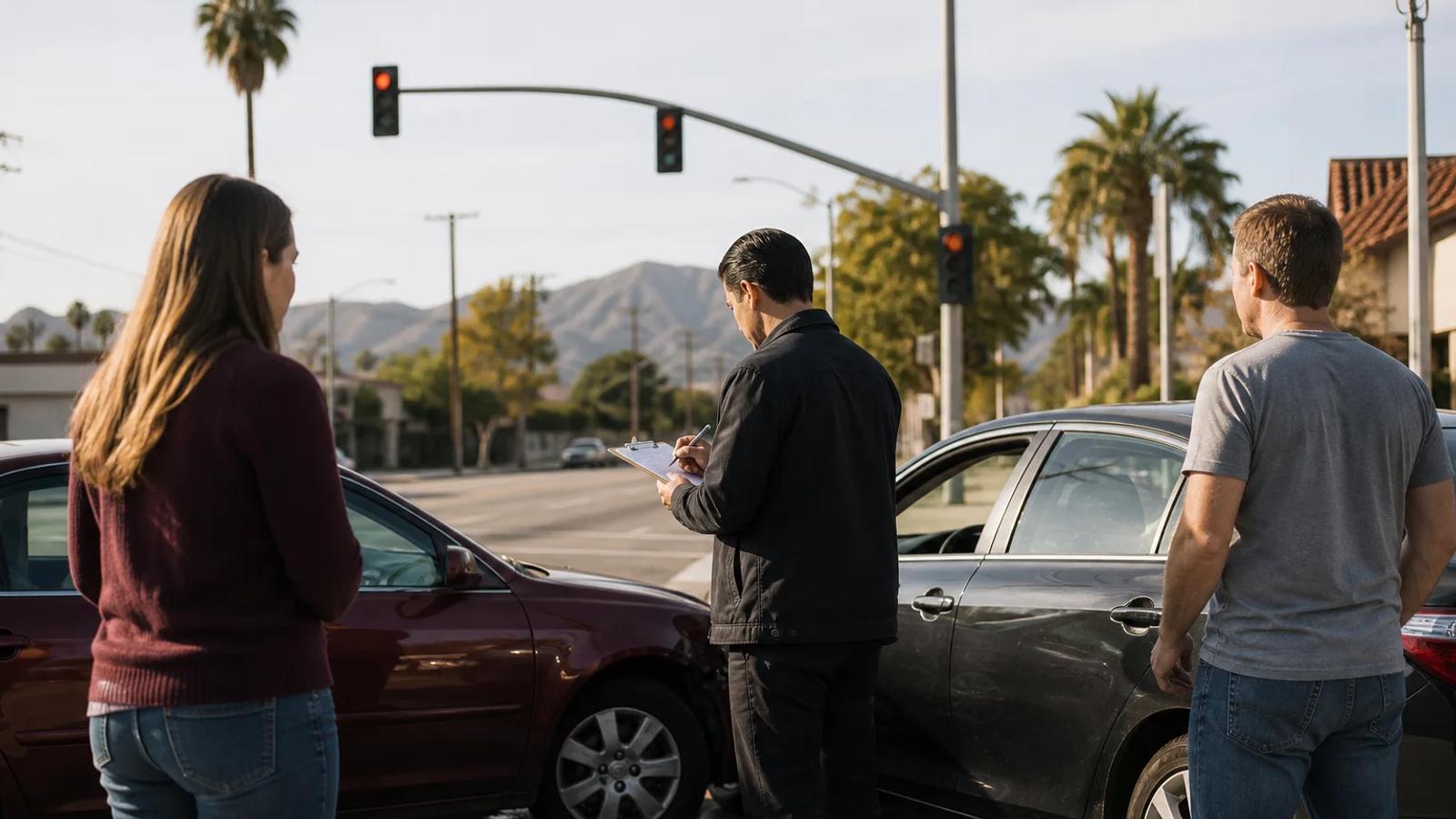
The other driver says the crash was your fault. Maybe you heard it at the scene, maybe it turned up as a line in the police report, maybe it arrived in a letter from an adjuster. That accusation does not decide who was legally responsible for a California crash. Neither does an insurer's first liability position. Responsibility depends on the conduct that occurred, the rules that applied, whether that conduct caused the collision and claimed harm, and what the evidence can support.
So start by pinning down what you're dealing with. Who said it? What did they say you did? Where does the allegation sit now? A shout at the scene, an adjuster's telephone summary, a police-report entry, a citation, a written claim denial, and an allegation in a lawsuit are different things. They require different responses, in different places, and may carry different deadlines.
Write down exactly what they said before you answer any of it.
“The other driver says it was my fault” is too broad to investigate. Write down the actual words you remember, who said them, when they were said, and where the accusation now appears. Keep a scene comment separate from an insurer's written position, a report entry, a citation, or a court paper.
Preserve the complete source. Keep the full letter rather than one quoted sentence, the original message thread rather than a cropped screenshot, and the complete report rather than a paraphrase. If an adjuster calls, note the caller, insurer, claim number, purpose, and whether a recording is requested. The separate guide on insurance-company recorded statements explains why the insurer and policy relationship matter before you respond.
Do not improve an uncertain memory to make it sound more complete. Mark what you personally observed, what another person told you, and what you learned later from a report or recording. Those are different sources.
You do not have to win the argument at the scene.
A collision scene is a poor place to reconstruct a few seconds of movement. People may be hurt, shaken, standing near traffic, or viewing the event from different angles. Address safety, exchange the required information, give responding officers accurate facts, identify witnesses, and preserve what you can without creating another hazard.
Avoid guessing about a speed, distance, signal phase, or sequence you did not observe. Avoid adopting the other driver's wording just to end an argument. “I do not know” and “I did not see that” communicate different facts; use the one that is true.
The broader sequence is in the guide on what to do after a California car accident. Follow that sequence while preserving the accusation as a separate piece of evidence.
Two timelines can show you which part of the crash is in dispute.
Work out the conduct being alleged — the exact thing they say you did behind the wheel. Then build one timeline for your movement and one for the other vehicle, traffic, and roadway conditions. Side by side, the two timelines help expose which second, movement, or causal connection is actually disputed.
| Claimed act | Questions about your movement | Questions about the other movement or conditions |
|---|---|---|
| Lane change | When did the movement begin, was a signal used, and where did contact occur? | Where was the other vehicle, how was it moving, and what could each driver see? |
| Following too closely | What distance and speed do you actually remember, and when did braking begin? | What happened ahead, how did the lead vehicle move, and what traffic or hazard affected the sequence? |
| Turn or intersection movement | Which path did you take, when did the turn begin, and which signal or sign applied? | What was approaching, what could be seen, and which part of the timing remains disputed? |
These questions do not decide the collision. They tell you what has to be checked. The deeper guide to evidence that may help prove fault after a car accident connects disputed driving conduct to photographs, video, witnesses, vehicle damage, reports, and other sources without treating one item as conclusive.
Answer the accusation where it actually lives.
Do not answer a formal paper with an informal phone argument. The place where the accusation appears determines what you do next.
If it sits in an insurer's written position, ask for the specific driving act, factual basis, and material considered. Correct a factual error with the complete source that supports the correction. If it sits in a police or California Highway Patrol report, take the report apart before you argue with it: separate the officer's observations from statements attributed to drivers or witnesses, the diagram, any citation, and any conclusion. If an objective detail is wrong, ask the agency about its correction or supplemental-statement process and keep both the original and the request.
A factual response is usually stronger than an accusation that the other driver lied or that one image is “indisputable.” State what you observed, identify the supporting source, explain the inference you dispute, and ask for a response appropriate to that record. You don't have to pretend the unhelpful facts are not there; accuracy includes acknowledging an unfavorable fact while disputing what it proves.
A percentage in a letter is a position, not a decision.
California's negligence instructions separate conduct, harm, and causation. When a party claims that the injured person was also negligent, that party must prove the asserted negligence and its causal role before comparative responsibility reduces damages. An insurer's percentage remains a claim position unless the parties resolve it or a decision-maker determines it.
That distinction is what keeps an accusation from being mistaken for a final allocation, however confidently it is written. The fuller rule and its limits are explained in California's comparative-negligence guide.
Know the point where waiting starts to cost you.
Prompt legal review matters when a vehicle or recording may change or disappear, an insurer has issued a written denial or percentage position, a response date appears in a letter, or a statement under oath is requested.
A summons, complaint, discovery request, deposition notice, subpoena, or other court paper requires a different response from an insurance discussion. Keep every page, and keep whatever shows how and when it reached you. Promptly review the policy and seek advice about whether notice to an insurer is required, but do not assume that telling your insurer replaces a court response.
Primary Legal Authority
- Judicial Council of California: 2026 Civil Jury Instructions (opens in a new window), including CACI Nos. 400, 405, and 406
Put the whole accusation on one page.
Copy the exact accusation word for word, note where it appears, name the driving act and causal link being claimed, and list what the original record supports, contradicts, or leaves open. Put any response date, and anything you are worried about losing, at the top.
A California car accident lawyer at Boyadzhyan Legal Shield can compare the accusation with the available record and help you work out which response belongs in the claim, report, or court process.
Initial consultations are free, confidential, and carry no obligation to hire the firm. If you want help evaluating the accusation and the next response, request a consultation.
Continue reading
What Evidence Helps Prove Fault After a Car Accident?
Car-accident fault is reconstructed from conduct, position, timing, visibility, and causation. The useful evidence is the evidence that answers the disputed question.
Personal InjuryHow Comparative Negligence Works in California Injury Claims
California reduces damages by an injured person's proven share of fault. The useful question is not the proposed percentage, but the conduct and causation supporting it.
Personal InjuryShould You Give the Insurance Company a Recorded Statement?
Before giving a recorded statement, identify the insurer, policy, instrument, scope, and asserted basis. A first-party request differs from an adverse carrier's interview.
- What Should You Do After a Car Accident in California?
- Do You Have to Report a Car Accident in California? Police, DMV, and Insurance Rules
- How Uninsured and Underinsured Motorist Claims Work in California
- Should You Accept the Insurance Company's First Settlement Offer?
- How Long Does a California Car Accident Claim Take?
- What Happens After a Hit-and-Run Accident in California?
- How to Document Lost Wages After a California Car Accident