Written by Boyadzhyan Legal Shield editorial team
Reviewed for legal accuracy by Knarik Boyadzhyan
Last substantively reviewed
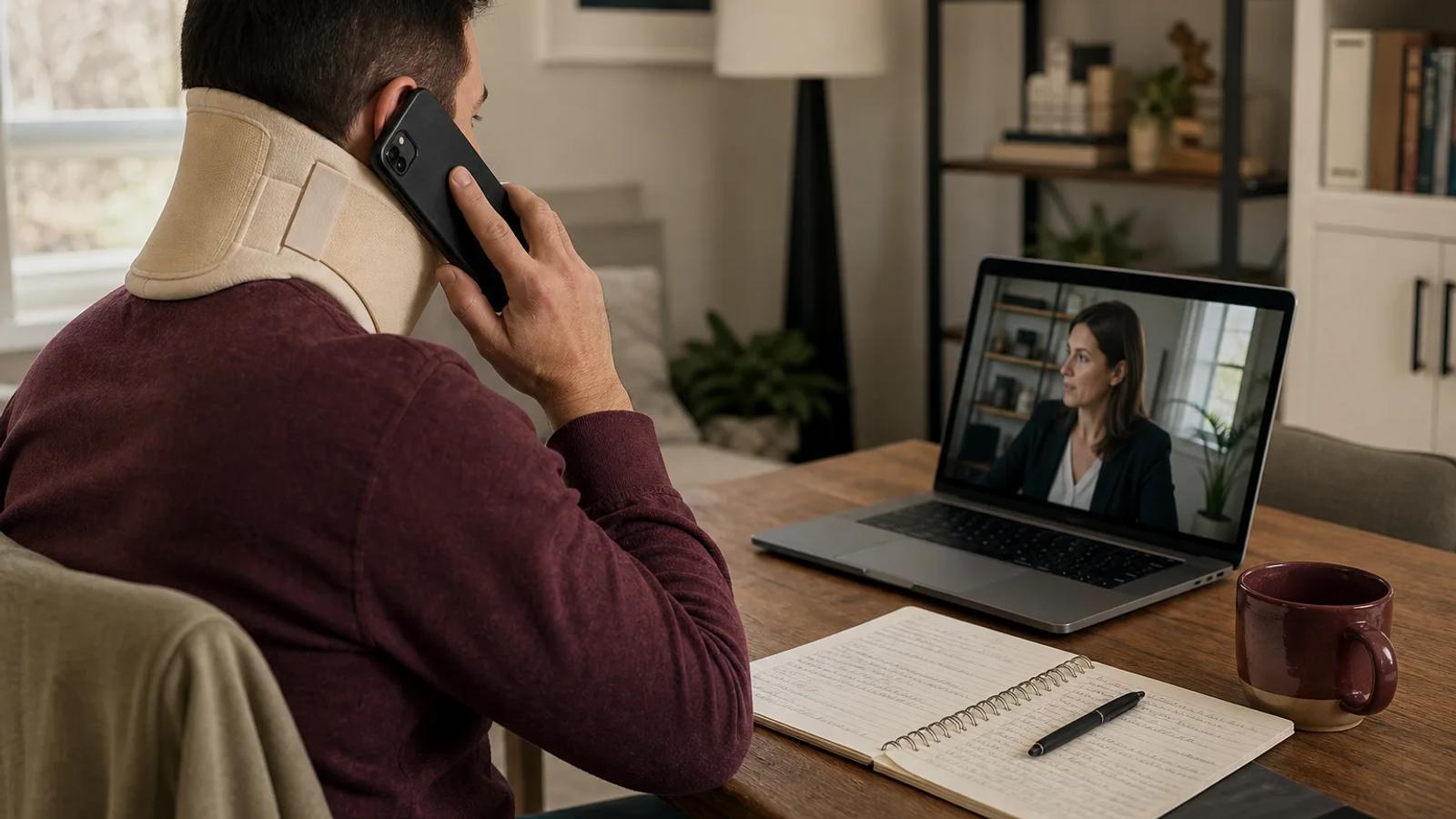
When an adjuster says, “I need to take your recorded statement,” the first responsible answer is not automatically yes or no. It is: Who is asking, under which policy or legal relationship, and what exactly do they want you to do?
Your own insurer may have contractual rights to information and cooperation under the policy, because there is a contract between you. The other side's insurer is not in that position; it does not have that same contract with you. A claim under your own uninsured or underinsured motorist coverage may involve your policy even though who caused the collision is disputed. A formal examination under oath may carry different policy consequences from an ordinary telephone interview.
Those differences are too important for a blanket rule, which is why nobody can honestly tell you “never give a recorded statement.” Before you agree, decline, or put a date in the calendar, settle what you are dealing with: the insurer, the policy or legal relationship, the exact request, the duty they assert, the subjects to be covered, and the date they are asking for.
Whose insurance company is calling changes the answer.
| Who is asking? | Why the relationship matters | What to identify before responding |
|---|---|---|
| Your insurer, including a carrier handling an uninsured or underinsured motorist claim | The policy may impose notice or cooperation duties, but the actual wording and requested process control | The insured person, policy, coverage, relevant provision, written scope, and requested date |
| Another party's liability carrier | The carrier is investigating a claim against its insured and does not have your policy's contractual rights | Whether the request is voluntary, the basis the carrier asserts, and the information it actually seeks |
| A caller whose role is unclear, or a lawyer or insurer after a lawsuit begins | Several insureds or policies may overlap, or formal discovery may now apply | The represented party, claim, served document, response deadline, and counsel's role |
The same company can appear in more than one role, so a familiar logo or a claim number you recognize is not enough to tell you which call this is. Ask for the caller's name, the company, the name of the person they insure, the policy or claim number, and their role. If the request came by phone, ask them to put the request in writing, together with the policy or legal basis it asserts.
Not everything an adjuster calls a “statement” is the same thing.
An initial notice of loss supplies basic information needed to open a claim. An ordinary recorded statement preserves questions and answers for an investigation. An examination under oath invokes a more formal policy process. A proof of loss is a written or verified claim document. A medical authorization permits access to defined records, while a release resolves or gives up identified rights. Those instruments should not be treated as interchangeable merely because an adjuster calls each one a “statement.”
The California Department of Insurance says an insurer may take a written or recorded statement after an auto claim is filed and may sometimes request an examination under oath. So an adjuster asking is not by itself a red flag; these tools exist. That is not the same as establishing that every policy requires every requested interview, or that every request has the same scope.
Before scheduling a response, ask:
- Which insurer, insured person, policy, coverage, and claim does the request concern?
- What exact instrument is being requested?
- Is the carrier saying the process is required by the policy, required by law or court procedure, or requested for its investigation?
- Will the response be recorded, sworn, transcribed, signed, or incorporated into another document?
- Which subjects and documents will the carrier cover or request?
- What policy or rule creates the requested date, and may counsel participate?
- Will the carrier provide the audio or transcript afterward?
The adjuster may have a legitimate need to investigate. You may also need time: to read the policy, to rebuild what happened from reliable records rather than memory, to obtain advice, or to ask them to narrow an overbroad request. Those two points can both be true.
Cooperation does not mean guessing.
If a statement is appropriately required or chosen, preparation should improve accuracy, not manufacture a script. Review materials that can reliably refresh your recollection, such as photographs, video, an incident report, contemporaneous messages, calendar entries, medical records, and prior communications with the carrier. Note where two sources conflict. Do not assume that a report is correct simply because it looks official.
During the statement:
- Let the question finish, and ask them to rephrase anything unclear or anything that is really two questions in one.
- Keep what you saw yourself separate from what someone told you later.
- If you are estimating, say so, and say what you are basing it on.
- Say that you do not know, or do not remember, when that is true.
- Do not predict a diagnosis, prognosis, future care, ability to work, or recovery that a qualified professional has not determined.
“I do not know” is not evasive when the information is genuinely unknown. It's more accurate than filling the silence with a guess. Accuracy also means not hiding the fact that hurts you. What is worth keeping apart is what you know, what a reliable record shows, what you are estimating, and what nobody knows yet.
“I'm feeling okay” is not a diagnosis.
An early insurance call may occur before complete records exist or before qualified health professionals have determined the nature and cause of reported symptoms. The risk is being pressed to turn a current observation into a final medical conclusion.
Keep apart how you feel and what you can do now, what you reported to a provider, what a provider observed or diagnosed, what testing showed, and what remains under evaluation. Health decisions belong with qualified professionals. A claim call should not be what decides whether you need care, and care should not be pursued or delayed to make the claim record look a particular way.
A medical authorization is a separate instrument. Review the actual document to see which providers, dates, subjects, and recipients it covers and how long it lasts rather than assuming it is a routine part of the call.
What you say on the recording can come back later.
An insurer may line your statement up against photographs, reports, witness accounts, medical records, claim forms, social-media material, later written discovery, or deposition testimony. If two of them do not match, that does not automatically prove dishonesty. Memory can be incomplete, a question can be misunderstood, and new information can emerge. But an unexplained difference can still become a subject of investigation or cross-examination.
California Evidence Code section 1220 provides that a party's own statement is not excluded by the hearsay rule when it is offered against that party in an action. That does not mean every insurance recording is automatically admissible or that every sentence will be heard by a jury. Authentication, relevance, completeness, privilege, and other evidence rules may still matter. What it does explain is why a call that sounds informal should be treated as a record rather than a conversation.
None of that makes a recording sinister; preserving an account can serve a legitimate investigation. The legal and practical questions are whether the right person is asking, under the right authority, about a scope that is appropriate, and whether your answers are accurate and understood.
Saying no to your own insurer is not the same as saying no to the other side's.
When your own insurer asks, start with the policy. The California Department of Insurance advises policyholders to read the policy, notify the insurer about an accident, cooperate with adjusters and investigators, and ask for an explanation when the claim procedure is unclear. This is the half where a blanket “never talk to an insurance company” can hurt you: do not reflexively refuse a first-party request, because failure to comply with a valid policy condition can create a coverage dispute. General cooperation language does not answer whether every question or instrument is required, however. If the carrier invokes an examination under oath, proof of loss, document-production condition, or another formal term, obtain the exact provision and the complete written request.
The other side's liability carrier is in a different position. It may ask for a statement while evaluating its insured's responsibility, your conduct, causation, and claimed loss. It does not have the contractual rights your own insurer may have under your policy. Ask the carrier to identify the basis and scope. If the interview is voluntary, counsel can evaluate whether a direct statement, a limited written response, another way of getting them the information, or no direct interview is appropriate.
Declining a voluntary interview is not the same as ignoring a claim, whatever it feels like in the moment. Necessary notice, proof, correspondence, or litigation obligations may still require action from you. The California personal injury claim guide explains where insurer investigation fits in the larger process.
If you already gave a statement, write down what happened before you try to fix it.
While you still remember it, write down the date, the time, who called, which carrier, who else was on the line, the topics covered, and the documents discussed. Keep the call log, the emails, the text messages, the portal notices, and any notes you made before or after the call. If the carrier will provide the audio or transcript, request it and compare the recording with the actual records.
The urge to send a quick correction is worth resisting until you've identified what was inaccurate or incomplete. A careful clarification may be useful, while a new explanation you can't support can create another inconsistency. If you signed a statement or proof of loss, preserve the exact version you signed and all attachments.
A lawyer can tell you which kind of call this is before you answer it.
Counsel can put the policy, the parties, the coverage, the written request, and the existing record side by side before advising you on the response. That review can distinguish a formal policy condition from a voluntary adverse-carrier interview, name what remains unknown, and address scope or scheduling without treating the request casually.
If a statement should proceed, counsel may help organize reliable records and clarify the difference among fact, estimate, memory, and medical opinion. If a direct voluntary statement is not appropriate, counsel can address what information still must be provided and through what channel. The goal is neither silence nor performance. It is doing what you actually owe, accurately, without creating an unnecessary, overbroad, or speculative record.
Recorded-statement questions are part of the larger investigation and claim context described on the firm's personal injury practice page.
Official Sources
- California Department of Insurance: Post-Accident Claims Guide (opens in a new window)
- California Department of Insurance: Automobile Insurance Guide (opens in a new window)
- California Evidence Code § 1220 (opens in a new window)
- California Department of Insurance: Consumer Services (opens in a new window)
A Practical Next Step
Before you call the adjuster back, write down who called, which insurer, whom they insure, the policy or claim number, the exact request, the subjects, and the requested date. Bring that, the written request, your policy, and the claim correspondence so far to a consultation. Initial consultations with Boyadzhyan Legal Shield are free, confidential, and carry no obligation to hire the firm.
Continue reading
How a California Personal Injury Claim Works
A California injury claim moves through a series of proof and decision stages, from investigation and insurance review to negotiation and, when needed, a lawsuit.
Personal InjuryWhat Evidence Helps Prove a California Personal Injury Claim?
Personal injury evidence is useful when it answers a fact that must be proved. Organize sources by responsibility, causation, injury, loss, defenses, and credibility.
Personal InjuryWhat Happens at a California Personal Injury Deposition?
A California personal injury deposition is sworn oral discovery. Sound preparation reconciles the record, clarifies personal knowledge, and protects accuracy.
- How Do Gaps in Medical Treatment Affect a California Injury Claim?
- How Comparative Negligence Works in California Injury Claims
- How Are Damages Calculated in a California Personal Injury Case?
- How Medical Liens Can Affect a California Injury Settlement
- California Personal-Injury Deadlines: How Long Do You Have to File?