Written by Boyadzhyan Legal Shield editorial team
Reviewed for legal accuracy by Knarik Boyadzhyan
Last substantively reviewed
Topics
Maybe you were on a backboard. Maybe you were in shock, or it simply didn't occur to you to take out your phone. Weeks later you are listing what you actually have, and everything you have read says that a careful claimant photographs everything at the scene.
The evidence needed to prove a California personal injury claim is not one universal packet you either collected or did not. A photograph, report, medical record, witness, or receipt matters only if it helps answer a disputed question in the particular claim.
That is good news if you couldn't document everything at the scene. One missing source does not automatically end the investigation. Start with the fact that needs proof, identify every possible source that could answer it, and preserve the most complete version that can be obtained lawfully.
California civil cases are not decided by counting documents, so the size of the pile you have is not the measure. Under Evidence Code sections 115 and 500, a party ordinarily must prove the facts essential to that party's claim or defense by a preponderance of the evidence unless another rule applies. CACI No. 200 describes that standard as showing that a fact is more likely true than not true. A single well-preserved source can matter more than a thick folder that never answers the controlling question.
What has to be proved decides what you need.
An ordinary negligence claim commonly asks whether the defendant was negligent, whether the plaintiff was harmed, and whether the negligence was a substantial factor in causing that harm. Other injury claims and defenses may require different facts. The first task is therefore to identify the actual questions, not to download a generic checklist.
| Question in the claim | Sources that may help answer it | A limit to keep visible |
|---|---|---|
| Who was involved or had control? | Ownership, employment, lease, maintenance, registration, policy, permit, and public records | A name on one record may not establish the person's role at the relevant time |
| What happened? | Photographs, video, physical conditions, reports, measurements, messages, electronic data, and firsthand witnesses | A source may show only one angle, moment, or person's observations |
| What caused the injury? | Event sequence, medical records, prior history when relevant, physical evidence, and qualified opinion when needed | An incident record does not automatically establish medical causation |
| What loss followed? | Medical and billing records, payroll, schedules, receipts, repair records, calendars, and testimony about concrete effects | A bill or pay record does not by itself connect the loss to the event |
| What defense or credibility issue may arise? | Earlier statements, complete message threads, other photographs, prior conditions, later events, and records of continued activity | Inconvenient material should be preserved, not edited away |
The same source can be strong for one issue and weak for another. Your medical record may document when you reported symptoms but say nothing about which driver had the green light. A payroll record may show what you were paid but not why you missed work. A report may identify witnesses and measurements without resolving how each statement may later be used.
What the law counts as compensable loss is a separate subject: damages in a California personal injury case. If a car was involved, evidence that may help prove car-accident fault goes further into that question. Neither should be compressed into this one general evidence list.
Start with whatever could disappear first.
If you're worried that the video is already gone, that worry is pointed at the right thing. The first priority is often the source with the shortest useful life or the least secure custodian.
Video can be overwritten. A property condition can be repaired. A vehicle or product can be cleaned, dismantled, transferred, or discarded. Electronic logs may rotate. Witness memory changes.
For each source that could still change or disappear, write down:
- what the source is and the fact it may answer;
- the exact location, date, and relevant time window;
- who owns or controls it;
- whether it is likely to be overwritten, repaired, altered, or disposed of;
- what version is already available; and
- the lawful next step for asking that it be preserved.
Do not enter private property, access another person's account, impersonate anyone, remove an object, or obtain protected information without authority. If a source belongs to a business, agency, medical provider, employer, platform, or another person, document the likely custodian and get advice about the appropriate request or legal process.
An informal request does not necessarily compel preservation or production. It can still be useful when it accurately identifies a camera, object, account, record type, event, and time interval before ordinary retention or repair changes the source. Formal discovery and subpoenas involve separate procedures after a lawsuit; California Courts' civil discovery guidance (opens in a new window) explains that broader framework.
Keep the whole thing, not the good part.
Keep the original file or object in its ordinary form when that can be done safely. Make a working copy before adding arrows, captions, crops, filters, highlights, or annotations. Preserve the full thread, full clip, surrounding pages, and attachments instead of saving only the favorable excerpt.
A short source log should state who made or gave you each item, when you got it, and whether it is an original, export, download, screenshot, scan, transcription, forwarded copy, or summary. For a physical object, record who has had it and any repair, cleaning, inspection, testing, transfer, or other change.
Metadata is not magic proof, and an original is not automatically admissible. The practical point is simpler: the complete source and its history give a lawyer a better basis for evaluating timing, authenticity, reliability, and missing context. A screenshot may preserve a useful lead, but it should not quietly become “the original.”
Preserve earlier and later versions. Do not delete a message because it seems unfavorable, replace an uncertain account with a cleaner one, or ask a witness to adopt someone else's wording. A record that complicates the claim may still be necessary to explain what actually happened. Selective preservation can create a separate credibility problem.
Each source answers one part of the question, not the whole of it.
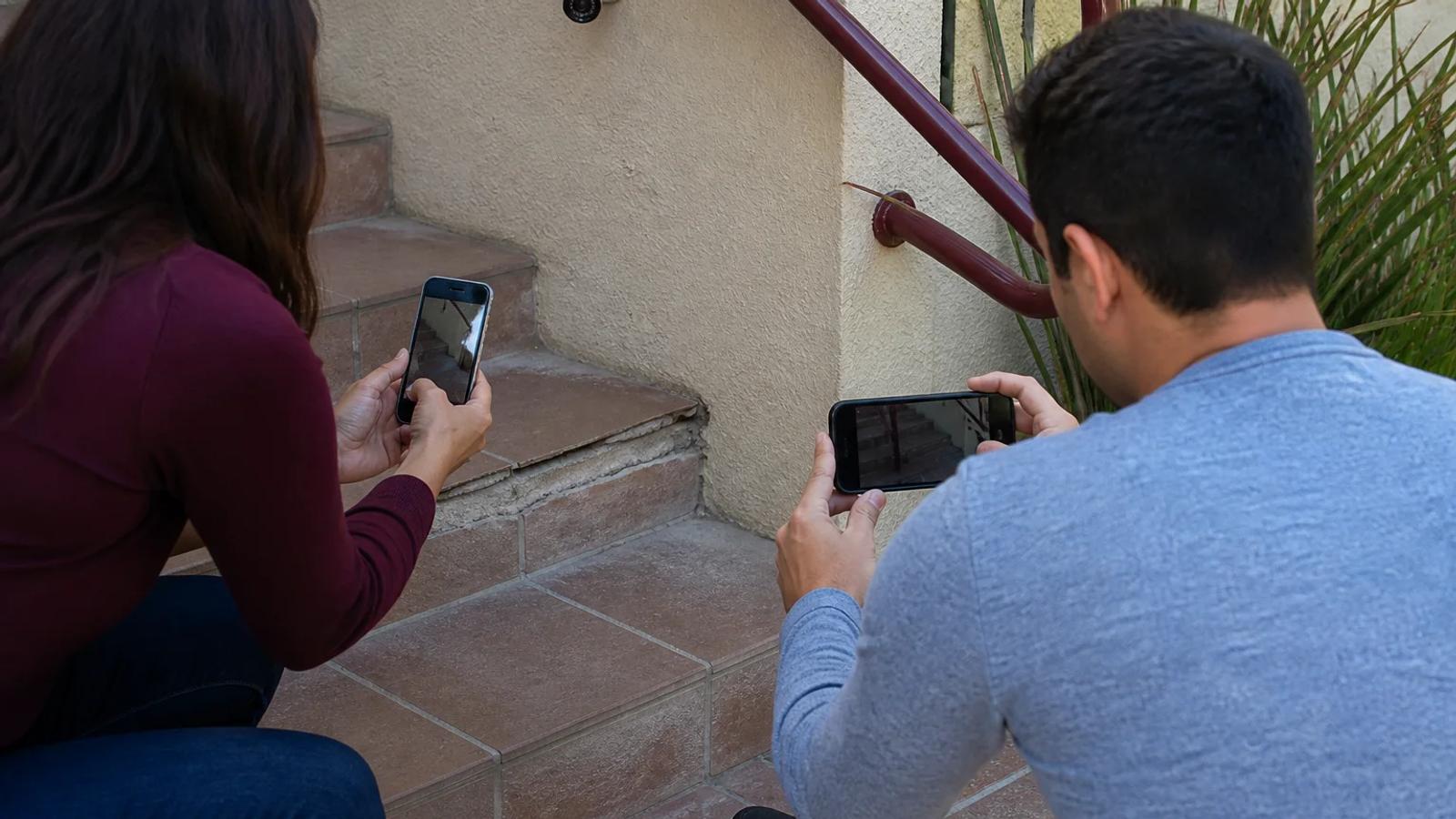
Photographs and video preserve a viewpoint, not the whole event. Keep wide views that show relationships and close views that show detail. For video, keep the seconds before and after the selected moment, preserve sound, and note the camera position and whether its clock appears accurate.
A report is a lead and a record, not an automatic judgment. Read it twice: once for what the writer personally observed, once for what another person reported. Look for the underlying photographs, diagrams, measurements, recordings, and witness identities rather than treating the report's conclusion as the complete evidence file.
A witness is most useful when the basis for the account is clear. Get contact details that reach the person directly, and write down where they were standing, which way they were facing, what was in the way, what made them look up, and what they personally saw or heard. Keep what they saw separate from what they estimated and from what they worked out later.
Medical records may show reported symptoms, professional observations, diagnoses, restrictions, and chronology. Billing records answer different financial questions. Health decisions belong with qualified professionals, not an evidence strategy. The focused guide to medical treatment gaps and the injury record explains how to document the true chronology without turning it into medical advice.
What you were earning needs the same kind of chain. Your schedule, restrictions when medically appropriate, time records, payroll, leave records, tax or business materials, and what you actually earned may each answer a different part of the loss question. The guide to documenting lost income after an injury addresses that reconciliation in detail.
When the standard item is missing, ask what it was supposed to prove.
If you have no photographs of the scene because you were the one needing emergency help, list the sources other people may have created instead: agency records, witness phones, nearby cameras, vehicle data, tow and repair files, property records, communications, and later photographs that show what changed.
If nobody independent saw it happen, the physical condition, sequence, timing, communications, and other circumstances may still support or contradict an account. If an original message is no longer available to you, preserve any lawful recipient copy, export, backup, or screenshot, and write down what is missing.
The useful question is not “Do I have the standard item?” It is: “What fact was that item supposed to help prove, and what other source may answer it?”
A lawyer can then turn your list into a source map: disputed fact, likely source, custodian, current version, preservation risk, missing context, and next lawful step. The firm's Personal Injury practice page explains that case-specific help, particularly when someone else controls the video, the electronic data, the vehicle, the product, the medical records, or the employment information you need. No lawyer can responsibly promise that evidence already deleted, overwritten, or destroyed will be recovered.
Primary Legal Authorities
- California Evidence Code § 115 (opens in a new window)
- California Evidence Code § 500 (opens in a new window)
- Judicial Council of California: 2026 Civil Jury Instructions (opens in a new window), including CACI Nos. 200, 202, 400, and 430
- California Courts: Discovery in Civil Cases (opens in a new window)
Bring the source map before evidence disappears.
Write one disputed fact per row. Beside it, list the source that may answer it, who controls it, whether you have the original or a copy, what context is missing, and when it may change or disappear. Bring that map and the material as it actually is — uncropped, unedited, awkward parts included — to a consultation. Initial consultations with Boyadzhyan Legal Shield are free, confidential, and carry no obligation to hire the firm.
Continue reading
How a California Personal Injury Claim Works
A California injury claim moves through a series of proof and decision stages, from investigation and insurance review to negotiation and, when needed, a lawsuit.
Personal InjuryHow Are Damages Calculated in a California Personal Injury Case?
California personal injury damages are separate forms of legally caused harm. Each category needs its own proof, causal connection, and non-duplicative explanation.
Personal InjuryCalifornia Personal-Injury Deadlines: How Long Do You Have to File?
California's general two-year injury statute is only a starting point. Public entities, delayed discovery, minors, and special statutes require separate analysis.
- Should You Give the Insurance Company a Recorded Statement?
- How Do Gaps in Medical Treatment Affect a California Injury Claim?
- How Comparative Negligence Works in California Injury Claims
- How Medical Liens Can Affect a California Injury Settlement
- What Happens at a California Personal Injury Deposition?