
Written by Boyadzhyan Legal Shield editorial team
Reviewed for legal accuracy by Knarik Boyadzhyan
Last substantively reviewed
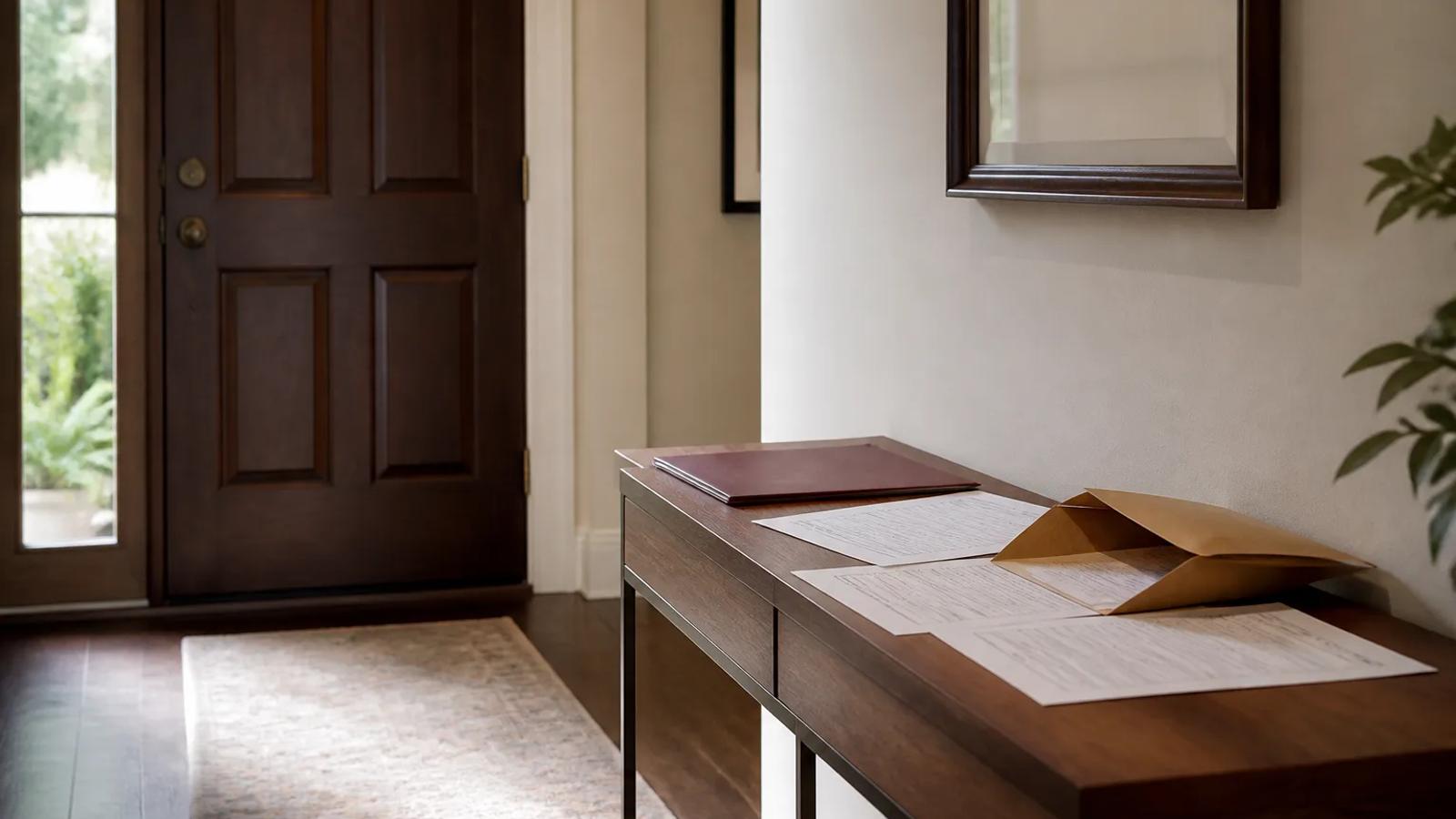
If officers are at your door with a search warrant, you're not going to stop the search in the doorway. What is still yours to decide is narrower than it feels, and it is not nothing. Do not obstruct the search physically. Keep your hands where officers can see them, say right away if anyone has an immediate medical or safety need, and ask for the warrant and every attachment. You can state that you do not consent to a search beyond the warrant and that you do not want to answer factual questions without a lawyer.
A warrant is an order to conduct the search it describes. It is not, by itself, an order to answer questions, sign a consent form, or hand over a passcode. The search, a request for permission, and a set of questions can all be happening in your hallway at the same time, and they are not the same thing.
The scene is not the place to win an argument about scope or validity. It is the place to protect people, avoid creating a new incident, and preserve an accurate record of the search.
Protect the people around you before you argue about the paper.
Ask before reaching into a pocket, moving toward another room, or picking up a phone. Tell officers promptly if someone needs medication or medical attention. If children, older adults, pets, customers, employees, or housemates are present, ask where they can remain safely.
Officers may give directions about where people can sit or move while the search occurs. Do not turn a disagreement about those directions into a physical struggle. If someone is restrained, separated, moved, or denied access to a needed item, record what happened afterward. The facts can be reviewed later, and you don't have to prove the point by resisting.
Keep the warrant, consent, and questioning separate.
California law defines a search warrant (opens in a new window) as a written order signed by a magistrate that directs an officer to conduct the search it describes. The exact place, person, property, device, record, or information named in the papers matters.
A request for permission can be different from the authority stated in the warrant. If officers ask to search somewhere or obtain access that you understand to be outside the papers, you can calmly say that you do not consent to any search beyond the warrant. Do not sign a consent form just because the request occurs during a warrant search. Do not try to enforce your reading physically.
Questions are separate too. Officers may ask who uses a room, owns a phone, knows a password, or placed an item somewhere. The search warrant does not itself require you to volunteer a factual account. You can state that you are choosing not to answer questions and want legal advice, then stop explaining. Do not guess, provide false information, hide property, or ask someone to erase or alter a record.
The police-questioning guide explains how to approach an interview request. The rest of this page is about the search itself and the record it leaves behind.
Ask for the complete paper, not only the first page.
Request the signed warrant and every referenced attachment. If the papers aren't provided immediately, note the request and ask again when the scene is stable. Do not grab the document, block entry, or assume the missing copy gives you permission to interfere.
When you can read the papers safely, locate the issuing court, warrant or case number, date, address or person described, property or information listed, and any incorporated exhibit. Preserve the original copy. A photograph is useful, but it shouldn't replace the paper.
The records created around the search answer different questions:
| Record | What it can help establish |
|---|---|
| Warrant and attachments | What the magistrate authorized officers to search for or seize |
| Property receipt | What officers reported taking from the person or location |
| Return and written inventory | What the executing officer later reported to the issuing court |
| Scene record | What occupants, cameras, photographs, logs, and other evidence show actually occurred |
Penal Code section 1535 (opens in a new window) requires a detailed receipt for property taken under a warrant, given to the person from whom it was taken or left at the place if no one is present. Section 1537 (opens in a new window) addresses the officer's later return of the warrant and written inventory to the magistrate. The receipt at the scene and the later court filing are two steps in the same chain, not the same document.
Watch what you can, but do not follow officers room to room.
If officers allow you to remain where part of the search is visible, observe without following them through the location. If they direct you elsewhere, comply physically and record the limitation later. Do not livestream the search or post about it while the investigation is active.
Notice what you can without narrating or assisting: the agencies present, officer names or badge numbers that are visible, the rooms or vehicles entered, containers or devices removed, requests for consent or access, property damage, and whether anyone is questioned or arrested.
Be precise about the limits of your observation. If a room was outside your view, say so in the later timeline. An accurate gap is more useful than a confident guess.
Write down what happened while you still remember it.
Write a private timeline for a lawyer to read. Record when officers arrived, entered, began searching, and left. Identify who was present, where people were placed, what officers asked, what responses were given, and what property was opened, copied, moved, damaged, or taken.
Preserve existing security video, entry logs, alarm notices, account alerts, photographs, texts, and emails in their original form. Photograph damage and the condition of affected rooms before repairs or reorganization, if it is safe to do so. Preserve witness names, but do not compare accounts or ask anyone to adopt your version.
Compare the property receipt with what you observed. A difference is a fact to investigate, not automatic proof of a legal violation. Keep the warrant, receipt, photographs, and timeline together so a lawyer can see where the records match and where they do not.
Treat device and account requests as separate facts.
A warrant may describe a phone, computer, storage device, account, or category of data. The seizure of a device at the scene does not, by itself, explain the full scope or timing of any later data review.
Preserve device identifiers on the receipt and any existing notices showing account access. Do not remotely wipe, disable, alter, or direct someone else to change a seized device or account. If officers request a passcode, biometric access, signature, sample, or additional consent, do not lie or physically resist. State that you want legal advice before voluntarily providing access, and record the exact request and response.
Questions involving another household member's, employee's, customer's, or business's information can require a separate privilege, ownership, or scope analysis. The fact that a device was carried away does not settle any of that, and this page cannot settle it either.
If someone is arrested, write down where they are taken.
A search warrant does not establish that anyone will be arrested. If officers make an arrest during the search, do not resist or try to explain the case during transport or booking. Record the agency, where the person is taken, and any release or court information provided.
Use the Los Angeles County after-arrest guide to sort the next questions about custody, release, filed charges, and the first hearing.
Bring the paper, the receipt, and your timeline to one review.
Save the warrant, attachments, receipt, court information, photographs, security footage, account notices, and private timeline. Mark any request for consent, access, a statement, or a signature, as well as any restraint, damage, seizure, or arrest.
Initial consultations with Boyadzhyan Legal Shield are free and confidential, with no obligation to hire the firm. Use the conversation to identify which paper, event, or preservation issue needs attention first. The firm's criminal defense practice picks it up from there.
Continue reading
What Should You Do If Police Want to Question You?
A police interview request is not the same as a detention, arrest, subpoena, or warrant. Identify the contact before answering or consenting to a search.
Criminal DefenseWhat Happens After an Arrest in Los Angeles County?
After a Los Angeles County arrest, booking records, release papers, the complaint, and court orders answer different questions. Learn which one controls next.
Criminal DefensePlea Agreement vs. Trial in a California Criminal Case
A plea decision requires more than a sentence comparison. Learn how to compare the complete written offer with the evidence and legal issues a California trial would test.
- California Firearm Sentencing Enhancements: The Number on the Paperwork, and Whether a Judge Can Take It Off
- California's Three Strikes Law: What Actually Counts as a Strike
- Expungement Under Penal Code 1203.4: What a California Dismissal Actually Does
- Immigration Consequences of a California Criminal Conviction: What the State Calls It vs. What Federal Law Counts
- Misdemeanor vs. Felony in California: What the Label Actually Means
- What Is a Wobbler in California? The Five Moments Your Charge Can Change
- What Happens at a Criminal Arraignment in California?
- What Happens When There Is a Warrant for Your Arrest in California?