
Criminal Defense
Plain-English guidance on Criminal Defense — what to expect, and how a case is defended.
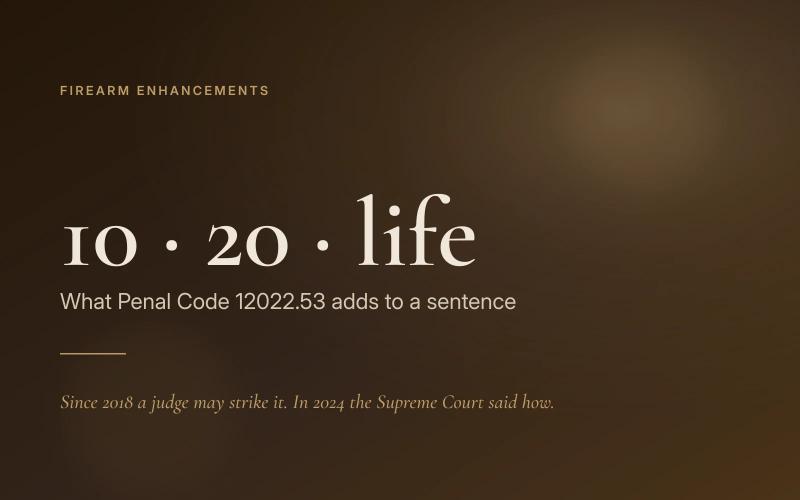
California Firearm Sentencing Enhancements: The Number on the Paperwork, and Whether a Judge Can Take It Off
A California firearm enhancement is two separate questions: what number the statute adds, and whether a judge may remove it. The second question moved in 2024 — the California Supreme Court held in People v. Walker that Penal Code section 1385 creates no presumption in favor of dismissal — and most published explanations still describe the older rule. Even a stricken enhancement can leave the probation bar, the credit ceiling, and the strike consequence behind.
California's Three Strikes Law: What Actually Counts as a Strike
California's sentencing math is the easy part: one prior strike doubles the term, and since 2012 a third felony that is not itself serious or violent usually does not carry 25 to life. The hard part is whether a particular old conviction is a strike at all — which often turns not on the offense's name but on what was specifically pleaded and proved in that case file.
Expungement Under Penal Code 1203.4: What a California Dismissal Actually Does
A Penal Code 1203.4 dismissal does not erase, seal, or delete anything. It withdraws your plea and dismisses the case, which changes who is allowed to ask about the conviction, who is allowed to see it, and who is allowed to hold it against you — and those three questions have different answers depending on whether you are looking at the Department of Justice record or the court file.
Immigration Consequences of a California Criminal Conviction: What the State Calls It vs. What Federal Law Counts
Federal immigration law applies its own definition of "conviction," so a California case a court calls dismissed, expunged, or reduced can still count against a noncitizen — while some dispositions genuinely do not count at all. This page maps each California label onto the federal rule that actually governs it, and names the two 2026 developments that changed the practical answers.
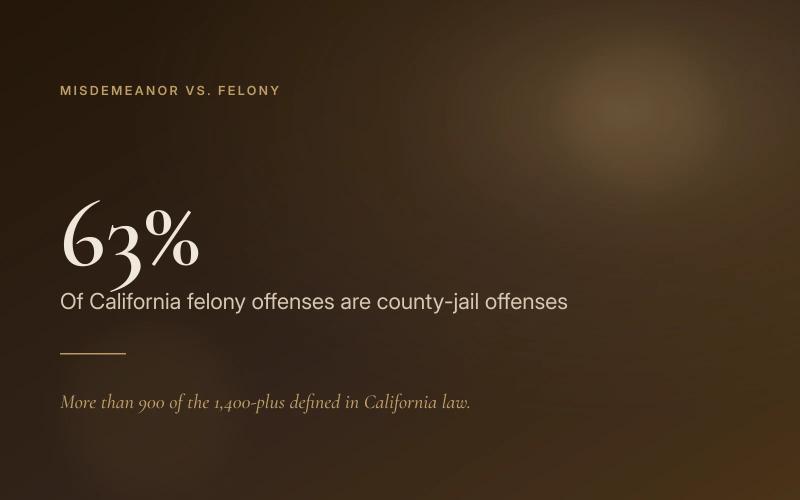
Misdemeanor vs. Felony in California: What the Label Actually Means
The word on your charging document is not the whole story. A California felony can be served in county jail, no California misdemeanor runs a full year, and most of the consequences people fear turn on the punishment a statute authorizes rather than on the label itself.
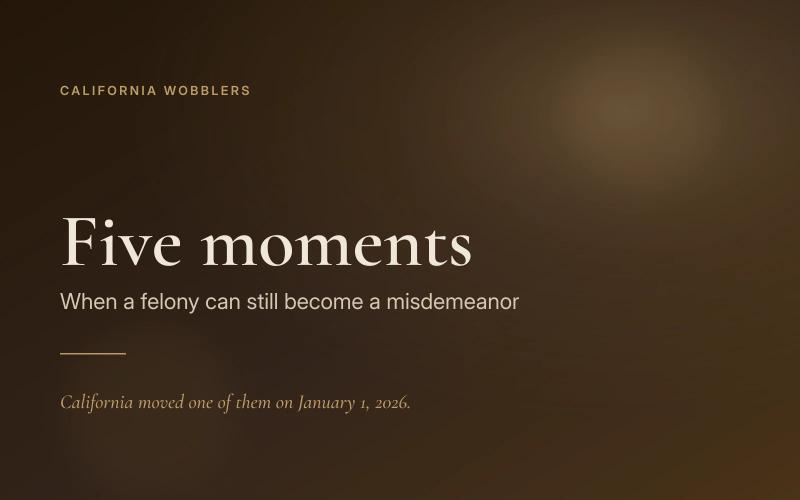
What Is a Wobbler in California? The Five Moments Your Charge Can Change
A California wobbler is an offense whose felony-or-misdemeanor status is never settled at charging: Penal Code section 17 gives five separate points where it can be fixed one way or the other, and as of January 1, 2026 one of those points was widened so any court can make the call any time before trial. Which point the change happens at is what determines whether it reaches your gun rights, a strike prior, a professional license, or nothing at all.

What Happens After an Arrest in Los Angeles County?
After a Los Angeles County arrest, booking records, release papers, the complaint, and court orders answer different questions. Learn which one controls next.

What Should You Do If Police Want to Question You?
A police interview request is not the same as a detention, arrest, subpoena, or warrant. Identify the contact before answering or consenting to a search.
What Happens at a Criminal Arraignment in California?
A California arraignment is not a trial. Learn what the court may decide, what remains open, when appearance is required, and which records to leave with.

What Should You Do If Police Have a Search Warrant?
A California search warrant authorizes a defined search, not an interview or unlimited consent. Learn what to request, observe, and preserve for later review.

Plea Agreement vs. Trial in a California Criminal Case
A plea decision requires more than a sentence comparison. Learn how to compare the complete written offer with the evidence and legal issues a California trial would test.

What Happens When There Is a Warrant for Your Arrest in California?
A confirmed California arrest or bench warrant authorizes an arrest, but it does not prove guilt or dictate one response. Verify the court record before making a plan.