
Written by Boyadzhyan Legal Shield editorial team
Reviewed for legal accuracy by Knarik Boyadzhyan
Last substantively reviewed
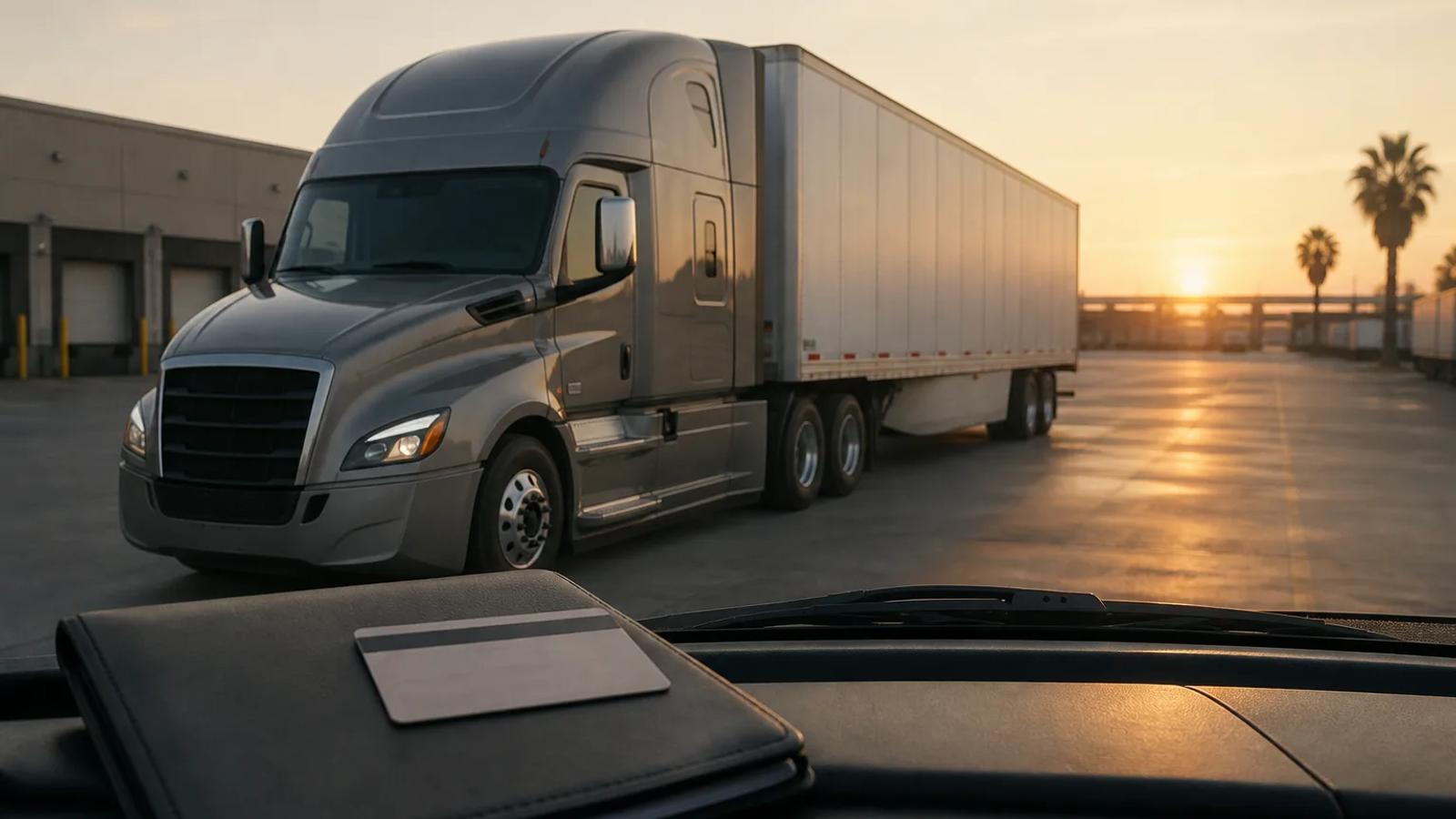
A commercial driver facing a DUI investigation often has two immediate questions: What happens in the criminal case, and can I keep driving for work?
Those questions are connected, but they are not answered by one license status. The criminal charge, the ordinary driving privilege, authority to operate a commercial motor vehicle, and employer-notification duties follow different rules. An incident in a personal car can affect commercial driving authority. Permission to drive a noncommercial vehicle does not, by itself, authorize commercial driving.
Before relying on any stated consequence, classify the actual record: the credential, vehicle, conviction or refusal, licensing action, and prior history. A familiar label such as “first DUI” or “personal-vehicle DUI” is not precise enough for a commercial-license decision.
Identify the credential, vehicle, and event first.
Obtain the front and back of the commercial driver's license or commercial learner's permit and a current driving record. Confirm the issuing state and the credential's status on the incident date. California may control the arrest and criminal case while another state controls the commercial credential.
Then find out what the vehicle was under the governing definitions, not what you and everyone at the yard call it. “Work truck” and “personal car” are not categories the statute uses. Vehicle Code section 15210 (opens in a new window) defines a commercial motor vehicle for California's commercial-license statutes by reference to license class and, for some Class C vehicles, required endorsements. Vehicle weight ratings, passenger capacity, cargo, and hazardous-material placarding may matter.
The initial classification should answer:
- What class, endorsements, restrictions, and issuing state appeared on your CDL or CLP?
- Was the vehicle a commercial motor vehicle under the applicable state and federal definitions?
- Was it transporting hazardous materials that required placarding?
- What statute and subsection appear on your court paperwork — the complaint, and the disposition if there is one?
- Is the event on your record a conviction, a reported chemical-test refusal, an arrest-based DMV action, or some combination?
- Does an earlier listed event appear, and did it arise from a different incident?
These details select the rule that decides your case. They are not paperwork to fill in after somebody has already told you how it turns out.
The 0.04 limit follows the vehicle, not your CDL.
Vehicle Code section 23152(d) (opens in a new window) prohibits driving a commercial motor vehicle with 0.04 percent or more, by weight, of alcohol in the blood. So a section 23152(d) charge against you requires proof that the vehicle fit the applicable commercial definition, not only proof supporting the reported alcohol level.
That is not the only California DUI theory that may involve a commercial driver. Section 23152 also contains alcohol-impairment, 0.08, drug-impairment, and combined-influence provisions. Depending on their elements, those provisions may be alleged after driving a commercial or noncommercial vehicle.
Holding a CDL doesn't make what happened a commercial-vehicle incident. You may hold a CDL and still have been driving a personal car. The shortcut fails in the other direction too: the fact that your employer owns the vehicle, or that you were on the clock, does not, by itself, prove every element of the statutory commercial-vehicle definition.
A DUI in your own car can still reach your CDL.
This is where the truck-is-the-boundary assumption breaks. The vehicle affects the criminal theory, but it does not end the commercial-disqualification analysis. 49 C.F.R. section 383.51 (opens in a new window) applies specified major-offense consequences to CLP and CDL holders after listed convictions in commercial and, for certain rows, noncommercial motor vehicles.
The distinction can be summarized without treating every DUI-related event alike:
| Record fact | Why it matters to the commercial analysis |
|---|---|
| A state-law alcohol DUI conviction in a personal vehicle | Federal Table 1 includes a qualifying non-CMV column for CLP and CDL holders |
| A 0.04 conviction while operating a CMV | The federal and California provisions contain a vehicle-specific commercial rule |
| A conviction involving a controlled substance | The exact offense must be matched to the wording of the applicable federal and state row |
| A reported chemical-test refusal | Refusal has its own listed treatment and may also appear in an administrative record |
| A CMV transporting placarded hazardous materials | The fact can change the period prescribed for a first covered event |
| An earlier covered event | The exact disposition and whether the events were separate must be established before applying the federal repeat-event row |
Vehicle Code section 15300 (opens in a new window) also identifies specified convictions and refusals that can disqualify a commercial driver. Its DUI cross-references must be read carefully because California has changed the subsection numbering within section 23152 over time. An offense described generally as “drug DUI” should not be assigned to a state or federal row without comparing the conviction statute, date, vehicle, and controlling text.
How long you would be off commercial driving depends on which row your record falls in.
These are the periods, and the conditions attached to them matter as much as the numbers. Current federal Table 1 generally prescribes a one-year commercial disqualification for a first covered major-offense conviction or refusal in its ordinary CMV or qualifying non-CMV column. It prescribes three years when the first covered event occurred while the driver was operating a CMV transporting hazardous materials that required placarding. A second covered Table 1 event from a separate incident can result in lifetime disqualification.
California sections 15300 and 15302 (opens in a new window) contain state first-event and more-than-one-event provisions for the violations they identify. The California record must be classified under the precise state text, while the federal repeat-event rule expressly calls for separate incidents.
Those periods are serious, but they are not a universal outcome chart. Before applying one to a person, verify:
- whether the federal non-CMV column applies to your credential status;
- whether your record shows a conviction, a refusal, or a different administrative action;
- the exact federal row and California section that include the event;
- the vehicle's CMV and hazardous-material status;
- the legal identity and incident date of any earlier event;
- what the licensing state has entered on the commercial record; and
- whether a separate restriction or suspension remains on your ordinary driving privilege.
The ten-year figure people repeat about a lifetime disqualification is narrower than it sounds. Federal section 383.51 permits a state to establish a limited rehabilitation program through which certain lifetime-disqualified drivers may be considered for reinstatement after at least ten years. It does not guarantee that a state offers such a program, that a particular driver qualifies, or that commercial authority will be restored.
A Class C privilege does not authorize commercial driving.
A commercial disqualification means that the person must not operate a commercial motor vehicle. Federal section 383.51 also prohibits an employer from knowingly allowing, requiring, permitting, or authorizing a disqualified driver to operate one.
That question is distinct from whether the current state record authorizes the person to drive some noncommercial vehicle. A restriction, an ignition-interlock arrangement, or a restoration of ordinary driving authority—when independently available—does not cancel a commercial disqualification.
Ask two separate questions:
- What does the current state driving record authorize this person to drive today?
- Do the state commercial record and federal rules authorize this person to operate this particular vehicle today?
Neither answer should be inferred from possession of a plastic license, an employer's schedule, a pending hearing request, or a verbal assurance. Use the current written records.
A result at the DMV does not automatically settle the commercial side.
If an officer handed you a DMV notice, that paper may have started an administrative matter of its own, before the criminal case is resolved. Vehicle Code section 13353.2 (opens in a new window) includes an administrative trigger for a reported alcohol concentration of 0.04 or more while driving a motor vehicle that requires a commercial driver's license. A refusal notice may invoke different provisions and issues.
That first DMV matter is not necessarily the same as a later commercial disqualification based on a qualifying conviction or refusal record. Winning one should not be assumed to erase an independent action on the other. The same goes for any plea offered to you: it should not be evaluated only by its immediate court terms without checking how the conviction statute and subsection may be classified for commercial purposes.
The DMV hearing versus criminal court guide explains why the agency and court files require separate calendars. If the officer issued a notice with a hearing-request period, the 10-Day Rule guide explains how to identify and respond to that deadline. Neither step, by itself, confirms that you may operate a CMV today.
You may owe your employer two notices, on two different clocks.
Whether to tell your employer may not be a choice you get to make. Two federal rules cover two different events, and they run on separate deadlines.
Current 49 C.F.R. section 383.31 (opens in a new window) requires a qualifying CDL operator to notify the current employer in writing within 30 days after a covered state or local traffic-control conviction. The covered violation can occur in any type of motor vehicle — your own car included — and the regulation specifies information the notice must contain.
49 C.F.R. section 383.33 (opens in a new window) addresses a different event: receipt of notice that the license, permit, or privilege to operate has been suspended, revoked, canceled, or otherwise withdrawn, or that the driver has been disqualified from operating a CMV. It requires notice to the current employer before the end of the business day after the day the employee received the notice.
Neither period is the California DMV hearing-request period. An employer policy, carrier requirement, collective-bargaining agreement, or licensing state may impose additional lawful duties. Preserve the written policy and obtain advice tied to the actual event before assuming either that no report is due or that an informal conversation satisfies the rule.
Preserve the commercial record before making a driving decision.
Keep the citation, complaint, release papers, test or refusal papers, DMV notices and orders, proof of receipt, and every court disposition. Add the current motor-vehicle record, CDL or CLP, vehicle specifications, placarding and cargo documents, and the employer's current written policies.
Existing dispatch, route, electronic-logging, bill-of-lading, post-incident testing, and vehicle records may help identify the unit and event. Do not alter a log or ask anyone else to revise one. Before entering a plea or resuming commercial driving, compare the actual proposed disposition and current licensing record with the applicable state and federal text.
Commercial-license advice may also involve another licensing state, federal compliance, or employment rights beyond a California DUI defense. Confirm at the outset which issues the lawyer has agreed to handle and whether separate CDL, transportation, licensing-state, or employment counsel is needed.
The California DUI evidence guide explains how video, witness accounts, testing records, and laboratory material may affect the underlying criminal allegation.
Official Sources
- 49 C.F.R. § 383.31: Notification of Convictions (opens in a new window)
- 49 C.F.R. § 383.33: Notification of Driver's License Suspensions (opens in a new window)
- 49 C.F.R. § 383.51: Disqualification of Drivers (opens in a new window)
- California Vehicle Code § 15210 (opens in a new window)
- California Vehicle Code § 15300 (opens in a new window)
- California Vehicle Code § 15302 (opens in a new window)
- California Vehicle Code § 23152 (opens in a new window)
- California Vehicle Code § 13353.2 (opens in a new window)
- California DMV: Commercial Driver's Licenses (opens in a new window)
Before you get back in the seat, find out what the record actually allows.
Bring your current driving record, the CDL or CLP, the complaint and any disposition papers, the DMV notices, proof of what you received and when, the test or refusal record, vehicle specifications, placarding information, and the employer's current policy to a case-specific review. The job in that first meeting is to identify the governing state and federal provisions and confirm what the written record authorizes today.
Boyadzhyan Legal Shield provides California DUI defense through our criminal-defense practice. Initial consultations are free and confidential, with no obligation to hire the firm. Learn more about California DUI defense or request a consultation.
This article provides general information, not legal advice. Commercial-license definitions, disqualification classifications, notice duties, present driving authority, and the effect of a particular conviction or refusal require current, case-specific review by qualified counsel.
Continue reading
The 10-Day Rule: Requesting a California DMV DUI Hearing
The California DUI hearing deadline belongs to the DMV notice, not the court date. Learn which dates matter, how to document a request, and what the hearing decides.
DUI DefenseDMV DUI Hearing vs. Criminal Court: What Is Different?
A California DUI arrest can create a DMV matter and a criminal case with different papers, deadlines, issues, burdens, and decisions. This guide shows what belongs to each.
DUI DefenseWhat Evidence Can Be Challenged in a California DUI Case?
California DUI evidence can be tested for relevance, completeness, lawfulness, scientific or procedural foundation, and fair interpretation. No single flaw automatically decides a case.
- What to Do After a DUI Arrest in California
- First DUI in California: What Happens Next?
- What Changes After a Second DUI in California?
- What Changes After a Third DUI in California?
- When Can a DUI Be Charged as a Felony in California?
- DUI Causing Injury in California: What Must Be Proven?
- Drug and Cannabis DUI in California: How Impairment Is Evaluated
- Underage DUI in California: Three Different Laws, and Which Court Hears the Case