Written by Boyadzhyan Legal Shield editorial team
Reviewed for legal accuracy by Knarik Boyadzhyan
Last substantively reviewed
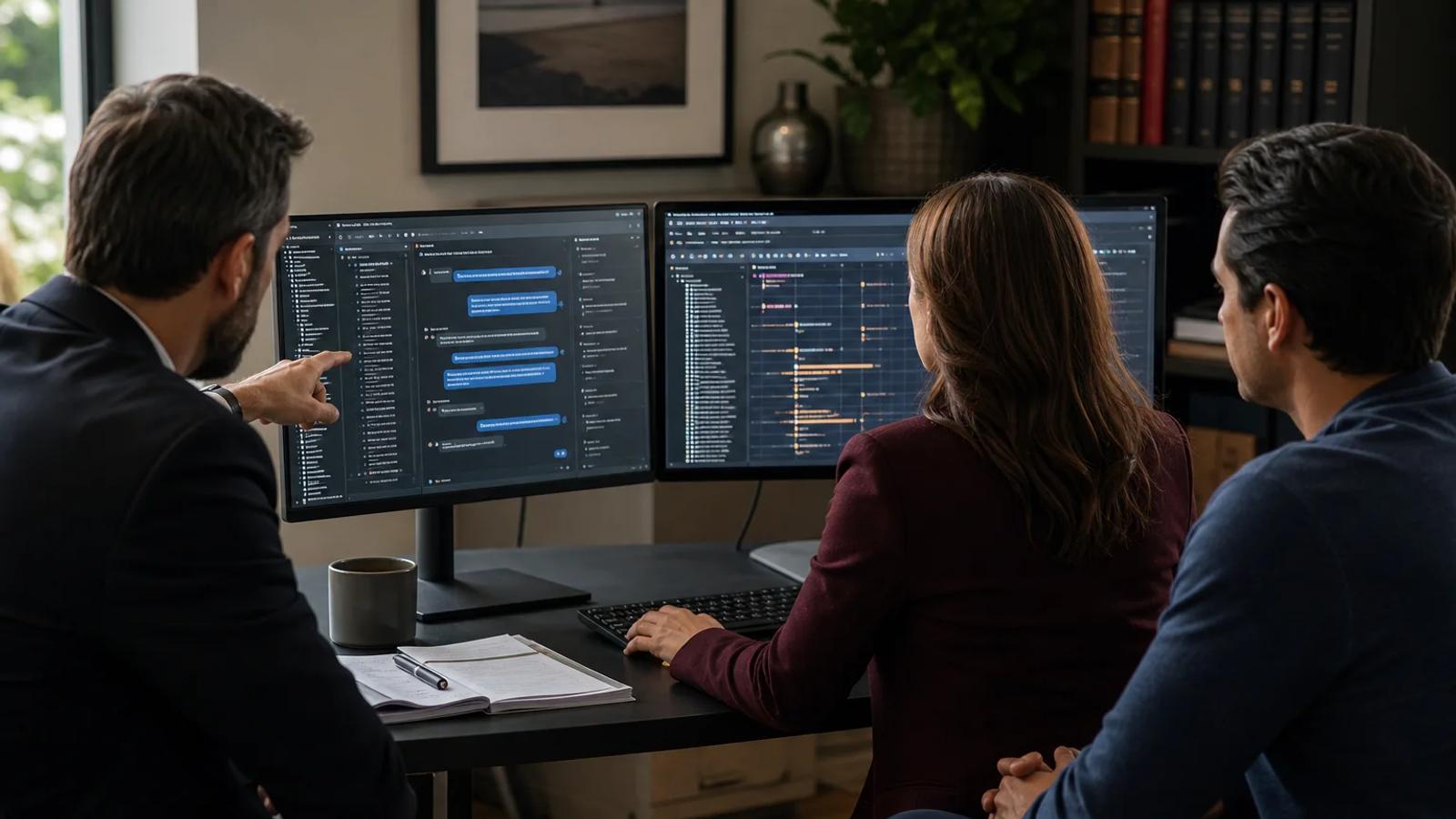
Someone may have handed a detective screenshots of a conversation you were part of, or a phone may have been seized. An image like that can look like the whole case, because it appears to show exact words on a familiar screen. Legally, it raises several different questions. What is the item? Who created the communication? Is it complete and accurate? How was it obtained? What fact relevant to the charged offense is it offered to prove?
Those questions should not be collapsed into “Is the screenshot admissible?” Whether an image comes in and what it proves are not the same question. A court may find enough support to authenticate an image without deciding that you wrote every message, that every statement is true, or that the excerpt proves an element. A cropped or forwarded image still needs to be compared with any fuller source.
If your instinct right now is to delete something, stop there. The immediate task is preservation, not self-directed forensics. Do not delete or edit data, and do not open, copy, export, forward, or send suspected illegal sexual material. Identify the possible sources and let a lawyer determine how the evidence can be obtained and reviewed lawfully.
A screenshot is one version of a larger record.
The same conversation can exist as a screenshot saved by one participant, a thread on either participant's device, an account archive, a backup, a provider response, or an extraction from a seized device. Those versions may not contain the same information.
A screenshot can preserve the words and visual layout someone saw while omitting account identifiers, earlier messages, attachments, or edit history. An account archive may use a server time rather than the local time displayed on a phone. A provider may hold connection records without the content of an encrypted conversation. No single source should be treated as the entire record merely because it's easiest to read.
For each important item, identify who produced it, the device or account it came from, when it was obtained, its current format, and whether a fuller source still exists. Keep provider notices, account-security alerts, warrant papers, property receipts, and report identifiers with the item. That source list gives your lawyer a way to ask for the missing record without entering another person's account or demanding access to someone else's device.
Preserve the evidence without creating a new problem.
Deleting an embarrassing message can remove favorable context along with unfavorable language. Resetting a phone, closing an account, editing a contact, restoring a backup, or trying to recover deleted data can also change the record that later needs to be explained. Penal Code section 135 (opens in a new window) addresses destroying, erasing, or concealing evidence with the knowledge and intent stated in the statute.
Preserve relevant devices and accounts in their existing condition. Do not trade in, repair, update, wipe, or remotely alter a device without case-specific advice. Save notices and records that already exist. Do not ask another participant to revise a profile, replace a message, or make a new screenshot that hides part of the exchange.
Suspected illegal sexual material creates a separate safety boundary. Do not open files to inspect them, make a copy, run an export, forward material, upload it, or attach it to a message for your lawyer. Tell counsel where the material may be and how you learned of it without transmitting it. Counsel can decide how lawful preservation and review should proceed. Preservation is not permission to create a new copy or transfer.
Authentication does not settle authorship or truth.
Under Evidence Code sections 1400 and 1401 (opens in a new window), a writing must be authenticated before it is received in evidence. Authentication means presenting enough evidence to support a finding that the item is what the side offering it claims. Evidence Code section 403 (opens in a new window) separately addresses preliminary facts such as authenticity and whether a particular person made a statement.
That distinction matters with messages. “This accurately shows what appeared on the witness's phone” is a different proposition from “this person authored the message.” Both are different from saying that a factual assertion inside the message is true.
An account name, profile picture, or saved contact label may contribute to the analysis, but it does not necessarily establish who had the device or typed at a particular time. Counsel can compare account access, device ownership, security notices, linked contact information, other communications, and witness testimony. Shared access or impersonation should be investigated only when the actual record supports the issue, not used as a stock explanation.
The surrounding exchange can change what an excerpt fairly shows.
A selected message may omit the question it answered, quoted text, an earlier representation, a correction, an attachment, a date break, or another participant. Evidence Code section 356 (opens in a new window) permits inquiry into material on the same subject, including material necessary to understand the portion introduced. It does not make an entire account history relevant in every case.
For each excerpt, ask what appears immediately before and after it, whether attachments and dates are visible, whether it was cropped or forwarded, and whether another source holds a fuller thread. The aim is to restore the context needed to understand the disputed communication, not to bury one statement in unrelated data.
Context must then be tied to the exact charge. Messages may be offered to show identity, communication, location, knowledge, intent, a relationship, or another fact. The charged statute and alleged date determine which question matters. One line can be the thing you can't stop rereading. Language about age, consent, silence, apology, or sexual content does not have the same legal significance in every sex-crime allegation, and no isolated phrase should be called decisive before the required element is identified.
Timestamps and metadata need translation before they support a timeline.
A timestamp can describe creation, sending, server receipt, local receipt, upload, download, editing, synchronization, or extraction. The displayed time may reflect a device setting, account setting, export format, server standard, or time-zone conversion. A discrepancy can matter, but it should not be labeled manipulation until the time field and event are identified.
Location evidence also has limits. A record may locate a device, an account session, a network connection, or an estimated area. It does not necessarily identify the person holding the device at that moment. An Internet Protocol (IP) address may connect an account to a network without identifying the individual author. Later copying, editing, messaging, or platform processing may change or remove photograph metadata.
Your lawyer can name the event represented by each field and compare it with independent records such as a receipt, access log, witness account, or another device. Treating metadata as either infallible or meaningless misses what it can actually prove.
Write down what you know, and mark the rest unknown.
None of this requires you to pull anything off a phone. For each important item, write a neutral entry that identifies:
- where the item came from and who produced it;
- its format and the fuller source that may exist;
- the person or account it is attributed to and why;
- the surrounding material that may be missing;
- the time field and event it appears to represent; and
- the count or disputed fact it is said to address.
Mark an unanswered question as unknown rather than filling the gap with speculation. Your lawyer can then compare the allegation with the most complete lawfully available record, determine which source needs attention, and decide whether specialized technical assistance is appropriate. The companion guide on investigator contact addresses immediate interview, consent, warrant, subpoena, and preservation decisions.
Do not use this source list as instructions to extract a phone or handle suspected illegal material. Specialized digital forensic work should be performed only through a lawful process directed by your lawyer and, when appropriate, a qualified professional. Federal, military, out-of-state, and juvenile matters may apply different authority and require separate forum- or age-specific advice.
If the digital evidence concerns an adult California state sex-crime investigation or charge, Boyadzhyan Legal Shield provides Sex Crimes defense as part of our criminal-defense practice. A first consultation is free and confidential, with no obligation to hire the firm. Bring the warrant, receipt, report, and neutral source list, not suspected illegal material. Request a consultation, or read the firm's Sex Crimes Defense page first.
This article provides general information about California evidence law, not legal advice for a particular case. Authentication, context, and legal use depend on the complete record, the purpose for which an item is offered, and current law.
Continue reading
What to Do If You Are Contacted About a Sex-Crime Investigation
An investigator's request, a warrant, and a subpoena create different decisions. Identify the contact, preserve the record, and get advice before discussing facts.
Sex CrimesWill a Plea Put You on California's Sex-Offender Registry, and for How Long?
A charge name or tier number does not answer the registration question. The exact disposition, offense date, findings, tier basis, and petition route all matter.
Violent CrimesWhat Evidence Matters in a Violent-Crime Case?
A useful California violent-crime evidence review connects every source to a disputed issue, then separates when the event happened, when it was captured, and how the item was handled.