Written by Boyadzhyan Legal Shield editorial team
Reviewed for legal accuracy by Knarik Boyadzhyan
Last substantively reviewed
Topics
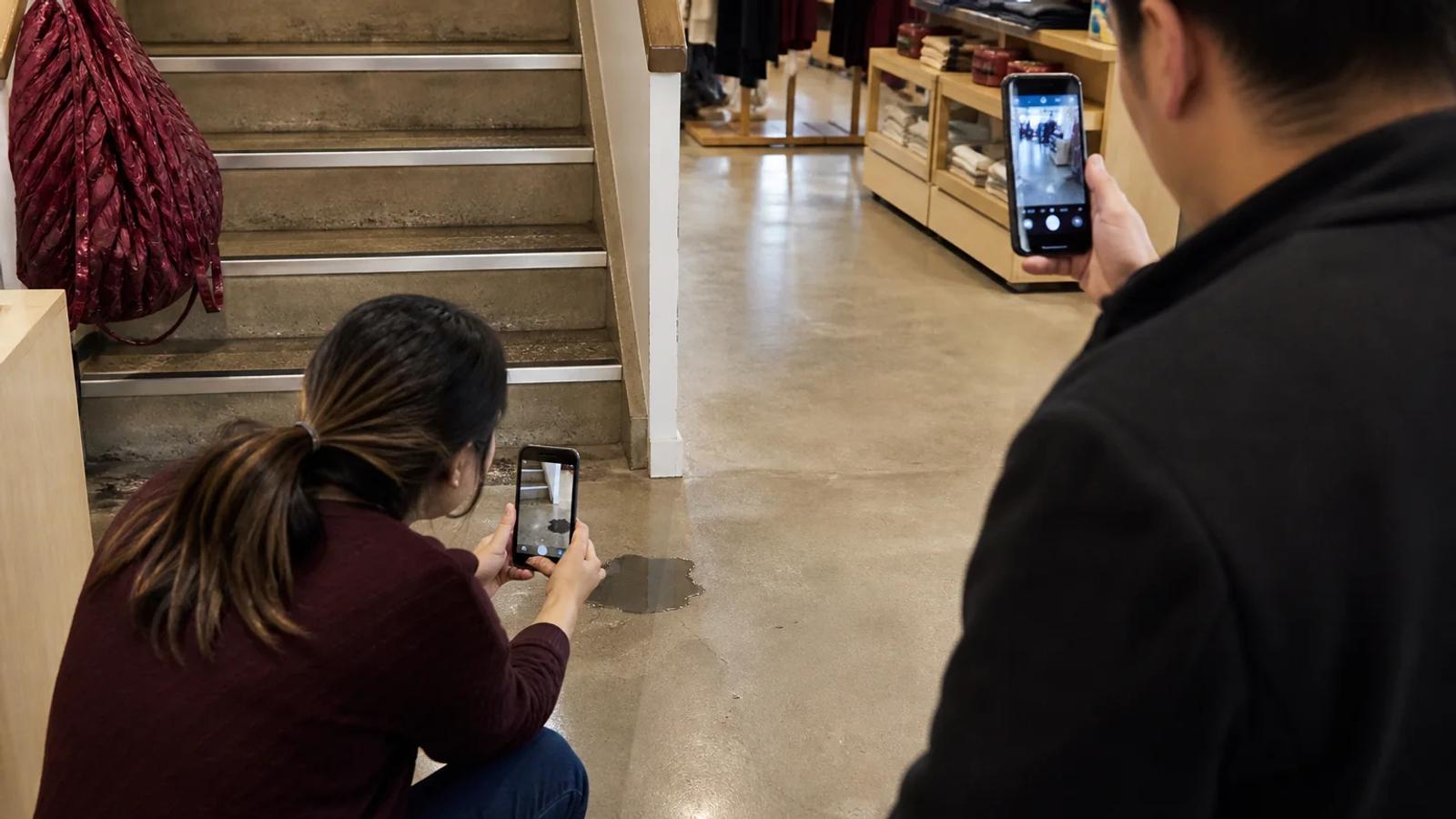
Photograph the condition. That is the obvious answer, it's the part you can do right now, and it's the smallest part of this. Much of what may matter later was never yours to keep: the camera, the cleaning record, the internal report the property may write for itself. A slip-and-fall scene can change quickly. A spill may be cleaned, a mat moved, a warning added, or a walkway repaired before anyone has decided whether a legal claim exists. A camera may hold the time before the fall, while the photograph you take afterward shows only one moment.
Health and immediate safety come first. Do not remain in danger, delay care to collect evidence, disturb the condition, or reenact the fall. If it is not safe for the injured person to document the area, another person may be able to do so without creating a new risk. A friend or an adult child holding the phone while the injured person sits down is doing exactly the right job.
The most useful record does more than show a close-up of the spot itself. It preserves the exact place, the approach, any warning, the movement that led to the fall, and the sources held by the property or another custodian. Ask three questions about each one: What can it show? Who controls the original? What has to happen before it is changed or routinely lost?
The close-up matters less than what is around it.
Start by pinning down where you are: the property, address, floor or level, aisle or room, nearby fixed landmark, date, and best-supported time. A receipt in your pocket, an appointment, a transaction, a parking record, a call, or a camera timestamp may later make the time more precise.
Describe what you actually saw, not what you assume it was. “Clear liquid” is more accurate than “water” if no one knows what the substance was. Do not supply a measurement from memory or call a surface “code-compliant” or “defective” without a reliable basis.
When it is safe and permitted, useful photographs may include:
- a close view of the condition without touching or moving it;
- wider views that connect the condition to fixed landmarks and the intended route;
- the surface, edge, slope, seam, mat, step, handrail, or other physical feature involved;
- lighting, glare, shadows, weather, doors, displays, carts, furniture, or crowding that affected the view;
- any footprints, tracking, wheel marks, debris, drying edge, or visible sign of recent cleaning; and
- nearby warnings, barriers, and cameras, including the direction a camera appears to face.
Your photograph can preserve appearance and context. It may not establish who created the condition, how long it existed, or who controlled the area. Treat those as three separate questions.
If the condition is cleaned, repaired, covered, or moved, record when the change occurred, who performed it, and what changed. A later image can document the new state without proving why the change was made or what the original condition meant legally.
Record the approach, warnings, and movement as separate facts.
A condition can exist without causing a particular fall, which is why the floor is only part of what you need. Preserve how the person approached, where the person was heading, which foot or mobility device contacted the area, what movement followed, and where the person landed. If the person remembers only part of that sequence, write down the gap instead of filling it in.
Warnings need the same treatment. A close image of a caution sign does not show whether it was present before the fall or visible from the approach. Photograph it from where the person was walking, then record its position, orientation, wording or symbol, distance from the condition, and anything that blocked the view. Ask witnesses what they observed before telling them what someone else remembers.
Video and witnesses may capture different parts of the movement. A witness may see the landing but not the first contact. A camera may show the approach without revealing the depth of a surface change. The earliest accurate account should stay accurate even when it does not answer every question.
Get the witness's own words, and read the report before you sign it.
Get a name and a phone number before the witness leaves. Then the location, the direction of view, and what first drew the person's attention. Distinguish someone who saw the condition before the fall from someone who arrived afterward. A person who observed cleanup may know nothing about the approach; an employee who heard an earlier complaint may know nothing about the fall mechanics.
If the incident is reported to a manager, landlord, employee, or other person responsible for the property, write down the recipient's name and role, the time and method of the report, the exact information provided, and any report or reference number. If someone hands you a form to sign, read the actual document before signing, correct material inaccuracies if permitted, and keep a complete copy of what was submitted. Do not guess about the condition's duration, legal fault, diagnosis, or future recovery. “I do not know” is a complete answer on a form.
An incident report may confirm that a fall was reported and preserve an early account. It is not a decision about liability. The property may also maintain an internal report that it does not provide voluntarily.
Property-held evidence needs a specific custodian and time window.
The fall itself may be only a few seconds of the relevant video. Earlier footage can address when the condition appeared, who created it, employee traffic, inspections, warnings, or reactions by other people. Later footage can show the condition, the first statements, photographs, cleanup, or warning placement.
Asking for “the video” leaves the custodian to decide what that means. A focused video request should identify:
- the exact property and area;
- the date and a reasonable period before and after the fall;
- each known or visible camera and its apparent field of view;
- the business, landlord, manager, neighboring property, security provider, or other entity believed to control the system; and
- the person who received the request, when it was sent, and any response.
You may have heard a figure for how long footage survives before it is overwritten. There is no universal rule for how long a business keeps surveillance. Do not claim that video exists or assign a retention period without evidence, and that applies to your own assumptions too.
The same source discipline applies to property records. Inspection logs, cleaning assignments, work orders, complaints, repair history, employee schedules, and maintenance agreements may bear on creation, notice, response, or control. A request that names the condition, the location, the time period, and the likely custodian is one a person can act on. A demand for every property record ever created is not.
The actual-versus-constructive-notice explanation shows why the pre-fall window and inspection record matter without treating either as conclusive.
Asking them to keep it does not put it in your hands.
This is the part that surprises people. A preservation request identifies a source and asks the custodian not to let it be destroyed or overwritten. It does not by itself require the recipient to give the evidence to the injured person, establish that the evidence exists, or decide what the evidence shows.
Production is a separate step. A property may provide material voluntarily. If a civil case is filed, a request for production may be directed to a party, while a subpoena may be used to require a nonparty to provide evidence under the applicable process. California Courts describes a subpoena as a court order requiring a person to provide documents or appear.
That distinction matters before you send an improvised demand of your own. Your immediate objective is narrower than it feels: identify the source precisely enough that a custodian can preserve it. Questions about voluntary access, formal discovery, a subpoena, objections, privacy, or admissibility depend on where the case stands and on the source.
Keep the shoes, and never annotate your only copy.
Shoes, clothing, and carried items may change through continued use, cleaning, repair, drying, or disposal. Photograph the item, write down who has it, and avoid altering it when its condition may matter. Putting the shoes back on is continued use. If an item is wet, contaminated, sharp, or otherwise unsafe, do not rely on general online storage instructions; protect health and obtain appropriate guidance.
Do not text yourself the photos and then clear them off the phone. For photographs, video, messages, and documents, keep the original file when available. Preserve the source device or account, file name, date and time information, and the identity of the person who created, exported, received, or copied it. Work from a duplicate if arrows, labels, crops, or conversions are needed.
An arrow drawn on the photo may help explain a location. The original allows someone else to evaluate what was changed and whether the file retains its context. Do not overwrite the only copy with annotations or rely solely on a social-media upload when the original remains available; a post is a copy, not the original.
For medical, work-loss, and other general claim records beyond the premises scene, the personal-injury evidence guide explains how to connect each source to the question it may answer.
Use one source register to see what is missing.
| Source | Question it may answer | Likely original custodian | Immediate preservation focus |
|---|---|---|---|
| Scene photographs | What did the condition and approach look like? | Photographer or source device holder | Keep original files, wider context, and identifying details |
| Witness account | What did the person observe, from where, and when? | Witness | Keep accurate contact information and the witness's own words |
| Surveillance video | When did the condition appear, and what happened before and after the fall? | Business, property manager, landlord, neighbor, or system vendor | Identify cameras, custodian, and a defined time window |
| Incident materials | What was reported, to whom, and at what time? | Reporting person and property record custodian | Keep the submitted statement, recipient, reference number, and complete exchange |
| Inspection or maintenance records | What system applied, and what was done in this area? | Property, manager, tenant, or service contractor | Identify the condition, area, relevant period, and record system |
| Shoes, clothing, or carried items | Did an item's condition bear on contact, transfer, or movement? | Injured person or current holder | Photograph, label, and avoid use or alteration when safe |
| Original digital files | What is the source, timing, and unedited content? | Device, account, camera, or record-system holder | Retain the source version and track copies or changes |
The register should distinguish sources already preserved from sources held by the property or another person. The California slip-and-fall proof guide connects those sources to control, unsafe condition, notice, response, causation, and harm.
Primary Legal Authorities
- California Civil Code § 1714 (opens in a new window)
- Judicial Council of California: 2026 Civil Jury Instructions (opens in a new window), including CACI Nos. 1000 to 1004, 1011, and 1012
- _Ortega v. Kmart Corp._ (2001) 26 Cal.4th 1200 (opens in a new window)
- California Courts: Subpoena Someone or Something (opens in a new window)
Make the list, then look at who is holding the rest.
Write the list while the details are fresh: the condition, route, warnings, witnesses, cameras, incident materials, property records, original items, and digital files. Beside each one, write the question it may answer, who is holding the original, and whether anything has yet been done to preserve it.
Video and property records outside your control may call for a focused preservation request or a later production process; the answer depends on the source and where the case stands. Bring the list and whatever originals you have if you request a consultation. Initial consultations with Boyadzhyan Legal Shield are free, confidential, and carry no obligation to hire the firm. The firm's slip-and-fall representation page explains the broader service.
Continue reading
What Must Be Proven in a California Slip-and-Fall Case?
A fall on property does not prove negligence. The claim must connect control, an unsafe condition, knowledge or creation, an unreasonable response, causation, and harm.
Slip and FallActual vs. Constructive Notice in a California Slip-and-Fall Case
Actual notice asks who knew of the particular condition. Constructive notice asks whether reasonable care should have discovered it in time to protect visitors.
Personal InjuryWhat Evidence Helps Prove a California Personal Injury Claim?
Personal injury evidence is useful when it answers a fact that must be proved. Organize sources by responsibility, causation, injury, loss, defenses, and credibility.