
Written by Boyadzhyan Legal Shield editorial team
Reviewed for legal accuracy by Knarik Boyadzhyan
Last substantively reviewed
Topics
If you have ended up as the relative who handles the paperwork, part of that job turns out to be a question nobody prepares you for: what the death is worth in dollars. California does not answer it with a preset value on a person's life, and it does not answer it with the paycheck alone.
The claim asks a more careful question, and it asks it about each eligible claimant one at a time: what did you lose because of the death, and what evidence supports that loss? You may have lost regular financial support. You may have lost childcare, home maintenance, advice, protection, or guidance. Another relative may have lost something else entirely. The same family can share a loss without every claimant having the same damages.
Code of Civil Procedure section 377.61 (opens in a new window) permits damages that are just under the circumstances while keeping wrongful-death damages separate from the decedent's survival claim. The 2026 California civil jury instructions organize ordinary wrongful-death damages into economic and noneconomic categories. Those categories give you a framework, not a calculator.
Start with the eligible claimant, not a case-value estimate.
Wrongful-death damages belong to the people authorized by section 377.60 for losses they personally suffered from the death. So the first thing to settle is whether you're one of them. Work through the California wrongful-death eligibility guide before you start assembling a damages record.
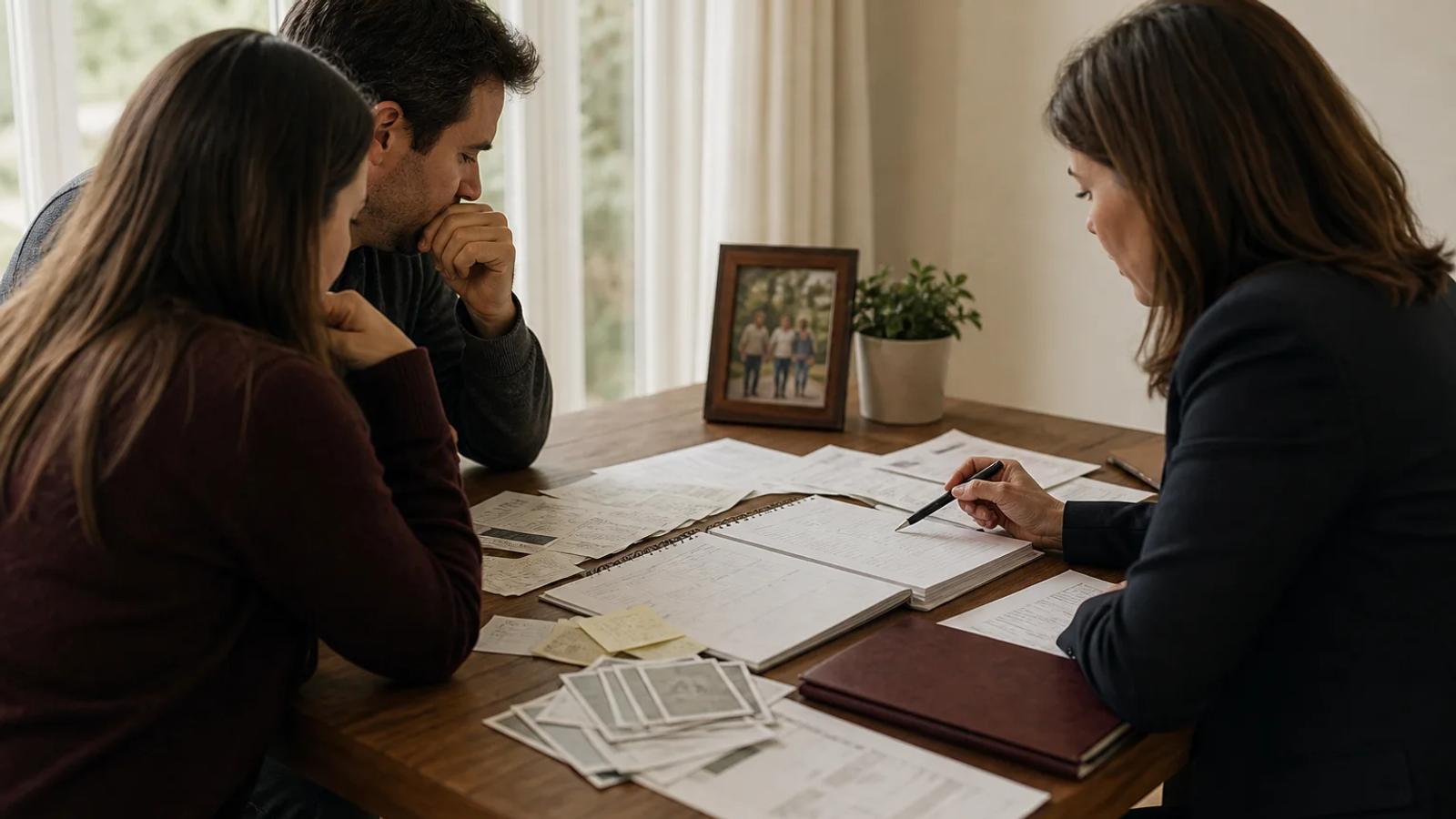
Then create a separate record for each claimant. Identify the support, benefits, services, and relationship that person actually lost, the time period involved, and the source that can explain it. A joint family narrative can hide meaningful differences between a spouse who shared a home and budget, an adult child who relied on advice or caregiving, and a minor child who depended on both income and daily parenting.
Eligibility and damages remain separate questions, and it cuts both ways. Being in a qualifying relationship does not establish a particular loss or amount, and being close to the person who died does not create standing outside the statute.
Economic damages track support, benefits, final expenses, and services.
CACI No. 3921 (opens in a new window), the 2026 instruction for the wrongful death of an adult, identifies four ordinary economic categories:
- financial support the decedent would have contributed to the family
- gifts or benefits a claimant would have expected to receive
- funeral and burial expenses
- the reasonable value of household services the decedent would have provided
Income is evidence of possible support, not the damages total. The question is what the person who died would reasonably have contributed during the supported period. Wage and tax records, pay stubs, benefit documents, transfers, household budgets, recurring bills, and testimony about how the household actually ran may all bear on that question.
Gifts or benefits also need a foundation. A recurring education payment, insurance benefit, use of housing, or other established contribution is different from an isolated generous act or an inheritance you were hoping for. Keep this category separate from regular support so you do not count the same dollar twice.
Household services can have value even though no wage was paid, which matters most where the person who died ran the house rather than earned the money. Childcare, cooking, transportation, maintenance, caregiving, scheduling, and financial administration may be documented through calendars, messages, school schedules, invoices, and witnesses. The point is not to put a price on every act of family life. It is to make substantial lost services concrete and supportable.
Final expenses should be traced to the person who incurred or paid them and to any reimbursement. Preserve the contracts, invoices, receipts, payment records, and insurance information rather than assuming the family and estate can both claim the same item.
Noneconomic damages describe the relationship that was lost.
CACI No. 3921 identifies loss of the decedent's love, companionship, comfort, care, assistance, protection, affection, society, and moral support. Depending on the claimant and relationship, the instruction also addresses lost enjoyment of sexual relations and lost training and guidance.
There is no fixed market price for those losses. Useful evidence describes the relationship as it was lived: how often the people spoke or spent time together, the care or advice provided, ordinary routines, shared responsibilities, communications, photographs, calendars, and witnesses who observed the relationship over time.
A relationship can be close without being perfect. A stretch of not speaking, a job that moved you across the country, a hard year nobody wants to describe: distance, disagreements, illness, and changes in routine may be part of an honest record. A concrete history is more useful than a page of superlatives.
Grief itself is not on the list. The relationship is.
CACI No. 3921 directs jurors not to include a claimant's grief, sorrow, or mental anguish as such in the wrongful-death award. It separately excludes the decedent's pain and suffering, and your own poverty or wealth, from this calculation.
That distinction does not minimize a family's experience. It separates emotional distress itself from the legally recognized loss of companionship, care, guidance, affection, and other aspects of the relationship.
The decedent's pre-death medical expenses, lost earnings, property loss, pain, and other damages belong, if recoverable, in a separate survival analysis. They should not be moved into the wrongful-death ledger simply because both claims arise from the same death.
A minor child's death and future loss require separate assumptions.
CACI No. 3922 (opens in a new window) addresses parents' recovery for the wrongful death of a minor child. It uses related economic and relationship categories, but also directs the jury to deduct the present cash value of the probable costs of the child's support and education. An adult-income model should not simply be applied to a child.
For an adult death, CACI No. 3921 measures expected financial support over the shorter of two lives: the life expectancy the decedent had before death, or yours. Health, habits, activities, lifestyle, occupation, and other evidence may affect that period; a published life-expectancy table is evidence, not a conclusive answer.
Future economic damages must be reduced to present cash value. The supported period can differ among a spouse, parent, adult child, and minor child. That is one reason a single family-wide number hides more than it shows. Build the future analysis by claimant and category rather than applying one end date to the whole family.
Professional-negligence wrongful-death cases have an additional noneconomic limit under Civil Code section 3333.2 (opens in a new window). For a judgment, arbitration award, or settlement reached in 2026, the limit is $650,000 for each applicable statutory category. The statute recognizes as many as three categories in some cases, but three limits do not apply automatically. Defendant affiliation, separate acts, the resolution date, and the category supported by the facts require review. This is a statutory ceiling, not a case-value estimate.
Keep survival and punitive damages in a separate analysis.
Section 377.61 excludes damages recoverable under section 377.34 from a wrongful-death award. A survival action may address loss or damage the decedent sustained before death, subject to the current statute. The wrongful-death and survival comparison explains that separation and section 377.34's 2026 filing-date boundary.
California generally does not include punitive damages in an ordinary wrongful-death award. That is usually the opposite of what people expect, especially when the conduct was shocking. Civil Code section 3294(d) contains a narrow provision tied to a death resulting from a homicide for which the defendant was convicted of a felony. A survival action may preserve a qualifying punitive theory the decedent held, but neither path follows merely because the conduct or loss was severe.
Build one loss ledger for each claimant.
| Claimed loss | Person and period to identify | Sources to preserve |
|---|---|---|
| Financial support | Claimant who expected the contribution and the supported historical or future period | Income, taxes, transfers, budgets, bills, benefits, and household testimony |
| Gifts or benefits | Intended recipient and the established pattern | Plan documents, beneficiary records, transfers, correspondence, and witnesses |
| Household services | Household member who lost the service and its frequency or duration | Calendars, messages, schedules, task history, invoices, and witnesses |
| Funeral or burial expense | Person who incurred or paid the expense and any reimbursement | Contracts, invoices, receipts, bank records, and insurance information |
| Companionship, care, or guidance | Each eligible claimant and the actual relationship period | Communications, photographs, routines, calendars, and witnesses |
A summary can organize the claim, but each entry should point back to an original source. Keep whole account histories and whole message threads when available, rather than screenshots of the parts that read well, and note who took a photograph or made a calendar entry.
The total is the easy part. The assumptions under it are not.
The legal work is not simply totaling columns. A lawyer can press on the parts you would have no reason to question: why each person has standing, which loss belongs to which claimant, what historical pattern supports a future assumption, whether the life-expectancy and present-value treatment is supported, and whether an item belongs in the survival action instead.
Liability and causation remain separate from the damages record. Everything above is about measuring what was lost, which is a different question from who is legally responsible for it: a well-documented loss does not by itself prove that a particular defendant legally caused the death. Defendant identity, comparative fault, public-entity rules, or professional-negligence limits may change the analysis and require their own review.
Official Sources
- California Code of Civil Procedure §§ 377.60 to 377.62 (opens in a new window)
- Judicial Council of California: 2026 Civil Jury Instructions, CACI Nos. 3921 and 3922 (opens in a new window)
- California Code of Civil Procedure § 377.34 (opens in a new window)
- California Civil Code § 3333.2 (opens in a new window)
- California Civil Code § 3294 (opens in a new window)
Make each claimed loss traceable to a person and source.
Create a separate loss record for every possible claimant and keep the decedent's pre-death losses in a different survival file. Bring the ledgers and original sources to a consultation for a claim-specific review. Initial consultations with Boyadzhyan Legal Shield are free, confidential, and carry no obligation to hire the firm. The firm's wrongful death practice can examine how the claimed categories, proof, and separate survival issues fit the facts.
Continue reading
Who Can File a Wrongful Death Claim in California?
California wrongful-death standing depends on a statutory claimant map, not simply who was closest to the person who died or who is handling the estate.
Wrongful DeathWrongful Death Claim vs. Survival Action in California
A wrongful-death claim addresses eligible survivors' own losses. A survival action continues a claim held by the person who died, with a filing-date rule that matters in 2026.
Wrongful DeathHow Long Do You Have to File a Wrongful Death Claim in California?
California's ordinary wrongful-death period is two years, but public-entity claims, medical negligence, survival actions, and other facts can put a different deadline first.