
Written by Boyadzhyan Legal Shield editorial team
Reviewed for legal accuracy by Knarik Boyadzhyan
Last substantively reviewed
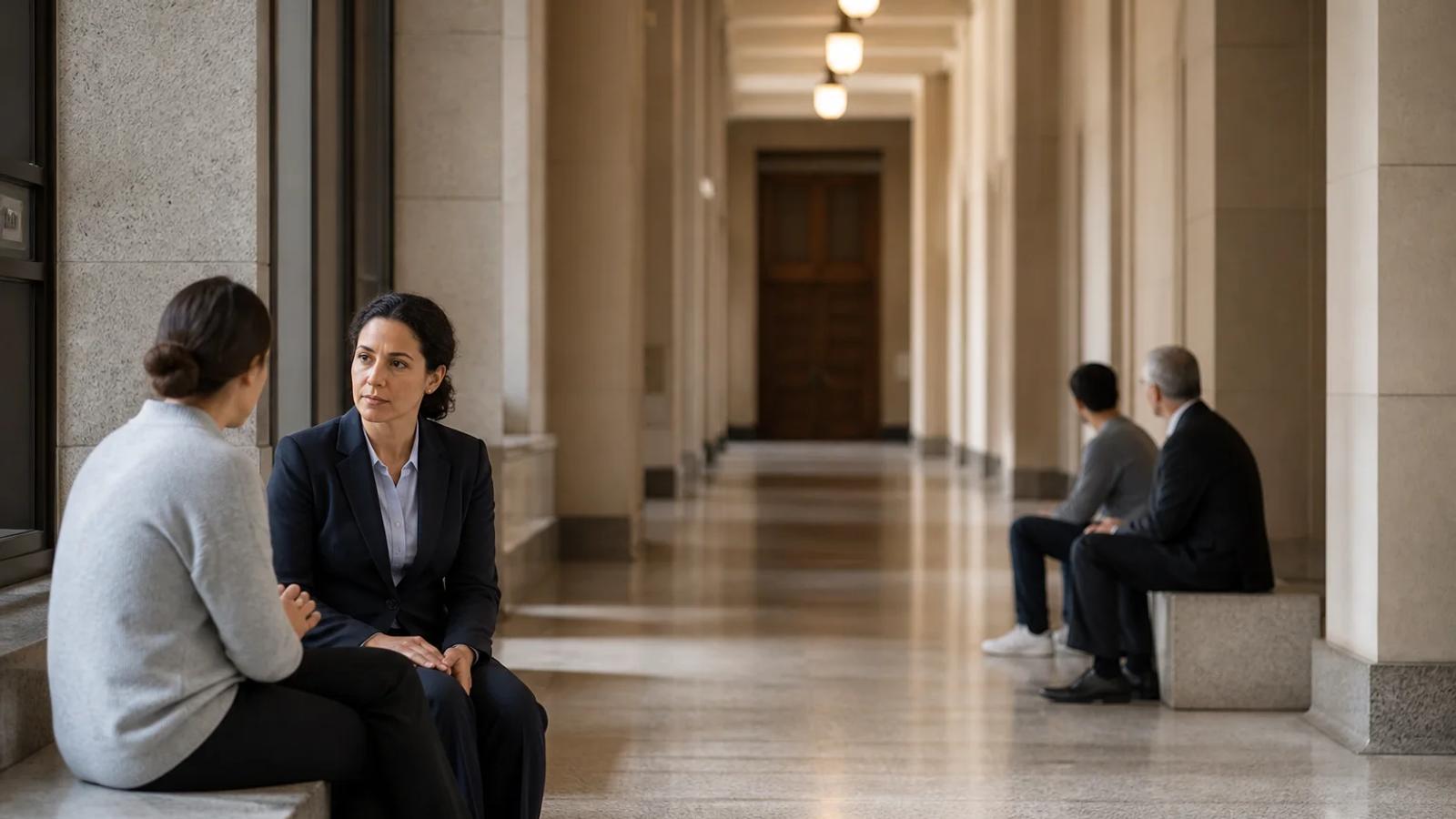
No. A person who reported alleged domestic violence cannot personally withdraw a California criminal charge. A reporting person can share facts and their preference for dismissal, but once an arrest has been made and a charge filed, they cannot personally dismiss a California domestic violence case or change a criminal protective order. Only a judge or magistrate can — not the prosecutor, and not the person who reported it.
Before a case is filed, the prosecuting agency decides whether to file a criminal complaint and what to allege. After filing, the prosecutor decides what position to take, but only a judge or magistrate can enter a dismissal under Penal Code section 1385.
A private agreement with the accused cannot end the prosecution or change a protective order. That does not make the reporting person's wishes irrelevant. Shared with the prosecutor, they can carry real weight. But the statement you're picturing right now, the one that takes the whole thing back, will usually do less than a single specific correction. Neither the sweeping recantation nor the specific correction can come from you, the accused. A statement you asked for, shaped, or arranged is no longer a correction. It is a new problem.
“Drop the charges” is five separate decisions.
The phrase “drop the charges” hides several separate decisions. Here they are, with the person who actually controls each one.
| Decision | Who controls it |
|---|---|
| Provide additional truthful information or correct an account | The reporting person supplies the information; law enforcement and prosecutors evaluate it |
| File a criminal complaint | The prosecuting agency |
| Continue litigating or apply for dismissal | The prosecuting agency decides its position |
| Dismiss a filed criminal action | A judge or magistrate acts under Penal Code section 1385, either on the court's own motion or on the prosecutor's application |
| Issue, change, or end a criminal protective order | The court |
Read the fourth row twice, because it is the one most people get wrong. The prosecutor decides a position. A judge or magistrate enters the dismissal, either on the court's own motion or on the prosecutor's application.
A reporting person may ask the prosecution to consider a preference, but cannot promise the accused that the case will end. The prosecutor may decide not to pursue a case or may apply for dismissal, but that does not let either person privately cancel a filed action or a court order. So a promise made to you in private is not a promise anyone is able to keep.
If you are the one who called the police.
This part is for the person who made the report. The rest of the page is written for the person facing the accusation.
California Constitution article I, section 28 gives a person recognized as a crime victim important rights. They include freedom from intimidation, the right to refuse a voluntary defense interview, and, on request, a reasonable opportunity to confer with the prosecuting agency about filed charges and a pretrial disposition. That last one is an opportunity to be heard. It is not a decision, and it is not a veto.
Those communications should go through an independent channel, such as the prosecuting agency or the reporting person's own lawyer. Whether release, contact, or participation presents a safety concern belongs in that conversation too. Nothing about it should be arranged by the accused.
Do not ask for a statement, and do not have someone else ask.
Penal Code section 136.1 prohibits specified knowing and malicious efforts to prevent or dissuade a victim or witness from reporting, assisting a prosecution, or testifying. In plain terms, it reaches conduct knowingly and maliciously aimed at stopping a witness from going to the police, helping the prosecution, or taking the stand. The mental state is part of the offense, not decoration. Whether particular conduct violates the statute depends on the facts, and this page cannot tell you whether yours does. What it can tell you is that the safe defense path does not require you to request a preferred statement.
Do not ask the reporting person to:
- “drop” the case or avoid the prosecutor
- sign a declaration written by you or by someone acting for you
- omit, soften, or coordinate facts
- delete messages, photographs, or an earlier account
Do not draft the message, select the facts, arrange the contact, or ask a friend or a relative to deliver instructions.
A criminal protective order under Penal Code section 136.2 may independently prohibit direct or indirect contact, separately from anything section 136.1 forbids. If an unsolicited message arrives while contact is prohibited, preserve the complete communication without replying or forwarding instructions through someone else. The criminal protective-order guide explains how to read the exact contact, residence, and child-exchange restrictions; a protected person's invitation does not amend the signed order.
The statement you want is the one worth least.
A preference, a correction, and a changed account are not the same thing, and the difference decides what any of them can do.
- A preference states what the reporting person wants the prosecution to do.
- A correction identifies a specific fact the person says was recorded inaccurately.
- A changed account supplies a materially different description of the incident.
None automatically proves that an earlier account was true or false. A careful review preserves the exact words, when and how each account was given, the questions that preceded it, and the independent sources that support or conflict with each point.
Here is the part that surprises people. Replacing a complete record with a broad declaration such as “nothing happened” can hide the very detail prosecutors or counsel need to evaluate. Counsel there means your lawyer. The sweeping version can bury the one checkable fact that would have been worth something to your side.
When the reporting person believes a fact is wrong, specificity is what makes a correction usable. A date, a location, a sequence, a translation, or another factual detail recorded incorrectly can be checked against something outside anyone's memory. A statement that says only that nothing happened leaves nothing to check.
A useful correction identifies the exact statement, what the person remembers instead, and any original source that bears on the difference. It also preserves the earlier account and explains the circumstances in which each version was given. That may include identifying an interpreter, a question the person misunderstood, or a message that fixes the timing. The goal isn't to script a better account; it's to make the person's own information clear, traceable, and available for independent review.
The guide to evidence in a California domestic violence case explains how a changed account gets compared against the other sources in a case. That evidence may affect a prosecutor's evaluation, but a changed account does not dismiss the case by itself.
What you can do instead, starting today.
Preserve the original communications before and after the reported incident, every version of an account already received lawfully, the current complaint, and all served orders. Read that phrase again: already received lawfully. Keep what has reached you properly, and leave any request for more to counsel.
Keep a factual timeline and identify recordings, photographs, records, or witnesses that may confirm or contradict a specific point. Work one disputed point at a time rather than gathering everything you can find; the wider list of papers to keep after an arrest is covered in the guide to what happens after a California domestic violence arrest. Do not create a new account through contact.
A defense lawyer can compare those sources, determine what additional material may be requested, and decide how lawfully obtained information should be presented to the prosecutor or court. That work does not promise dismissal. It gives the case a record that can be evaluated without making the reporting person part of the defense team.
Primary Sources
- California Courts, Charges Filed (opens in a new window)
- California Constitution, article I, section 28 (opens in a new window)
- California Penal Code section 1385 (opens in a new window)
- California Penal Code section 136.1 (opens in a new window)
- California Penal Code section 136.2 (opens in a new window)
Bring the complete record, not a promised recantation.
Bring the complaint, every current order, the original communications, and a timeline of each account. Bring them even if you've been told the case is about to go away. Boyadzhyan Legal Shield offers free, confidential initial consultations with no obligation to hire the firm. The firm's domestic violence defense practice works from that record, not from promises.
Continue reading
What Happens After a Domestic Violence Arrest in California?
A California domestic violence arrest can lead to immediate release terms, a short-term protective order, a separate filing decision, and a first court hearing.
Domestic ViolenceHow Criminal Protective Orders Affect Contact, Housing, and Children
A California criminal protective order can regulate contact, distance, housing, children, and firearms. The exact checked terms and court-approved exceptions control.
Domestic ViolenceWhat Evidence Matters in a California Domestic Violence Case?
A useful California domestic violence evidence review connects each original source to the filed charge, tests the full timeline, and identifies what an isolated report, recording, photograph, or message cannot establish by itself.